EN
EN

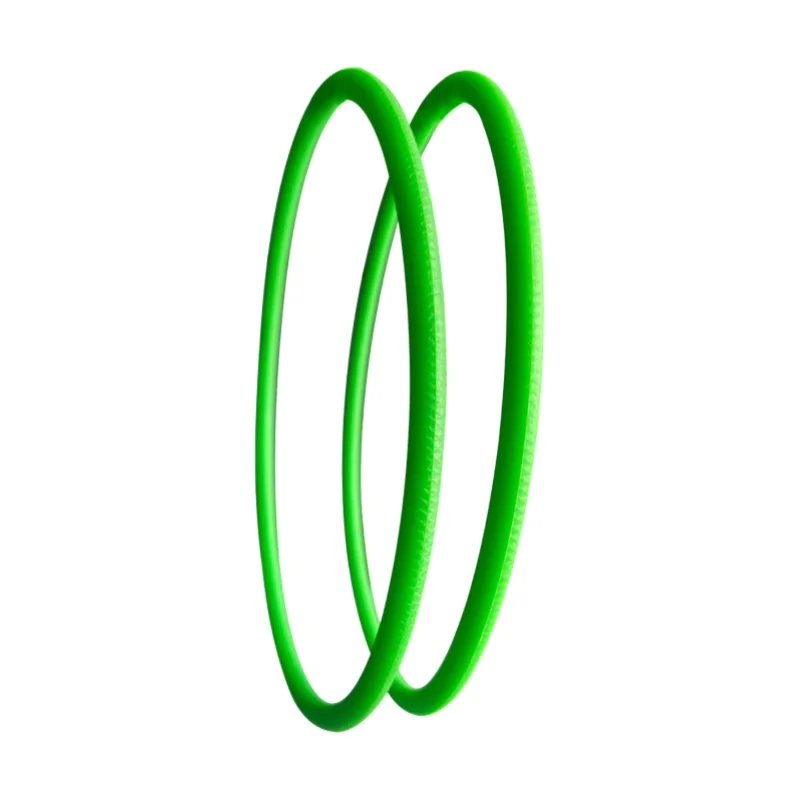
In the intricate landscape of industrial transmission systems, round belts have emerged as a uniquely adaptable solution for applications demanding flexibility across multiple planes of motion. Unlike flat or V-belts constrained to single-axis rotational paths, round belts excel in environments where power must be transmitted through compound angles, spiral configurations, and non-planar routing schemes. Their cylindrical cross-section and elastic properties enable them to navigate complex pulley arrangements that would cause premature wear or operational failure in conventional belt types. This inherent versatility makes round belts indispensable in industries ranging from automated packaging to precision laboratory equipment, where spatial constraints and directional changes define the mechanical architecture.
The engineering challenge of multi-directional pulley systems lies in maintaining consistent tension, minimizing friction losses, and preventing belt slippage when drive paths deviate from coplanar arrangements. Traditional belt configurations often require multiple intermediate components or compromise efficiency when forced through angular transitions. Round belts address these limitations through their circular geometry, which distributes contact pressure uniformly around pulleys regardless of orientation. This fundamental design advantage, combined with material innovations in polyurethane and elastomer compounds, allows round belts to function effectively in three-dimensional drive systems where conventional options would require complex tensioning mechanisms or fail to maintain adequate grip through directional changes.
Geometric Advantages in Non-Planar Drive Configurations
Circular Cross-Section Benefits for Angular Transmission
The circular profile of round belts provides a critical mechanical advantage when transmitting power through pulleys positioned at varied angles relative to each other. In standard flat belt systems, angular misalignment creates uneven load distribution across the belt width, leading to edge wear and tracking problems. Round belts eliminate this concern entirely because their symmetrical cross-section presents identical contact characteristics regardless of pulley orientation. This geometric property allows designers to route round belts through vertical, horizontal, and oblique planes within a single drive system without introducing stress concentrations that accelerate degradation.
When round belts engage with grooved pulleys in multi-axis configurations, the contact area remains consistent even as the belt approaches from different spatial directions. This consistency translates to predictable friction coefficients and reliable torque transmission across the entire pulley network. Engineers can calculate power delivery with greater confidence because the belt-to-pulley interface maintains its mechanical properties through directional transitions. The ability to preserve contact geometry across angular changes makes round belts particularly valuable in compact machinery where space limitations force pulley placement outside traditional parallel arrangements.
Flexibility Through Compound Curves and Spiral Paths
Complex industrial applications often require drive systems that navigate around obstacles or follow three-dimensional pathways connecting equipment at different elevations and orientations. Round belts demonstrate exceptional performance in these scenarios due to their ability to bend through compound curves without developing internal stress patterns that cause premature failure. The homogeneous material composition and circular geometry allow round belts to flex simultaneously in multiple planes, accommodating spiral drives, helical paths, and serpentine routing configurations that would be impractical or impossible with alternative belt types.
In automated conveyor systems serving production lines with varying floor elevations, round belts can transition smoothly between horizontal transport sections and inclined or declined segments while maintaining power transmission efficiency. The belt material's elastic recovery properties ensure that repeated flexing through these transitions does not induce permanent deformation or fatigue cracking. This durability in multi-directional applications reduces maintenance intervals and extends operational lifespan compared to belts designed primarily for single-plane operation. Manufacturing facilities benefit from this reliability by minimizing unplanned downtime and reducing the total cost of ownership for complex material handling systems.
Tolerance for Pulley Misalignment and Positioning Variation
Practical industrial environments rarely achieve perfect geometric alignment between drive components due to installation tolerances, thermal expansion, structural settling, or deliberate design compromises. Round belts accommodate these real-world imperfections more effectively than precision-dependent alternatives because their circular cross-section naturally centers itself within pulley grooves regardless of minor alignment deviations. This self-centering tendency reduces the criticality of installation precision and allows for gradual adjustment of pulley positions during system commissioning without requiring complete belt replacement.
The forgiving nature of round belts regarding pulley alignment proves especially valuable in retrofitting existing machinery or upgrading legacy systems where structural modifications are cost-prohibitive. Engineers can introduce additional drive stations or redirect power flow through new pathways without completely redesigning the mechanical framework. This adaptability accelerates project implementation timelines and reduces capital expenditure for system enhancements. In maintenance scenarios, replacement round belts can accommodate slight wear-induced changes in pulley positioning that would render more rigid belt systems inoperable, extending the viable service life of the entire drive assembly.
Material Properties Enabling Multi-Directional Performance
Polyurethane Composition and Elastic Behavior
Modern round belts predominantly utilize polyurethane formulations engineered to balance flexibility with tensile strength, creating a material capable of withstanding the mechanical demands of complex pulley systems. Polyurethane's molecular structure provides excellent elastic memory, allowing round belts to recover their original dimensions after repeated bending cycles through tight radii and angular transitions. This characteristic prevents the accumulation of residual strain that would otherwise compromise belt geometry and transmission efficiency over time. The material's resistance to compression set ensures that contact pressure against pulley surfaces remains consistent throughout the belt's service life.
The durometer range of polyurethane used in round belts can be tailored to specific application requirements, with harder formulations offering greater wear resistance for high-speed operations and softer compounds providing enhanced grip in lower-velocity precision systems. This material versatility allows round belts to function effectively across diverse operating conditions, from the sustained rotational speeds of industrial conveyors to the intermittent indexing movements of laboratory automation equipment. Chemical resistance inherent to polyurethane also protects round belts from degradation when exposed to oils, solvents, and cleaning agents commonly encountered in manufacturing environments.
Tensile Reinforcement Strategies for Load Distribution
While basic round belts rely on homogeneous polyurethane construction, advanced variants incorporate internal reinforcement elements to enhance load-carrying capacity without sacrificing flexibility. Helically wound tensile cords embedded within the belt cross-section distribute applied forces longitudinally while maintaining the circular profile necessary for multi-directional operation. These reinforcement structures prevent excessive elongation under load, preserving drive ratios and preventing slippage in high-torque applications. The reinforcement design must balance strength enhancement with flexibility preservation to ensure the belt retains its ability to navigate complex pulley arrangements.
Engineers selecting round belts for demanding multi-axis systems must evaluate the relationship between tensile strength and minimum bend radius, as reinforcement typically increases resistance to tight-radius flexing. Manufacturers address this trade-off through careful selection of cord materials, filament diameters, and embedding patterns that optimize strength-to-flexibility ratios. Applications requiring both high power transmission and extreme routing flexibility may necessitate custom belt specifications developed in collaboration with material engineers who can model stress distribution through specific pulley configurations. This engineering investment yields drive systems capable of reliably transmitting substantial power loads through spatial arrangements that would be infeasible with off-the-shelf belt products.
Surface Texture Influence on Grip and Friction Management
The outer surface characteristics of round belts significantly impact their performance in multi-directional pulley systems by controlling friction coefficients and determining grip reliability across varying contact angles. Smooth-surface round belts minimize friction losses and operate quietly, making them suitable for precision equipment where consistent rotational velocity matters more than maximum torque capacity. Conversely, textured or roughened surfaces increase the coefficient of friction between belt and pulley, enabling reliable power transmission in systems with limited wrap angles or where environmental factors like dust accumulation might compromise grip.
In complex drive configurations where round belts contact pulleys from multiple approach angles, surface texture uniformity becomes critical to maintaining balanced friction characteristics throughout the system. Inconsistent grip across different pulley stations can create uneven loading that introduces vibration or causes premature wear at specific contact points. Manufacturers employ controlled surface treatment processes to ensure round belts deliver predictable friction behavior regardless of contact orientation, allowing system designers to calculate tension requirements and select appropriate motor capacities with confidence. This consistency proves particularly important in synchronized multi-axis systems where timing precision depends on uniform power transmission across all drive components.
Design Considerations for Multi-Directional Applications
Pulley Groove Geometry and Contact Optimization
The interface between round belts and their corresponding pulleys represents the critical zone where power transmission occurs, making groove design a fundamental determinant of system performance in complex configurations. Groove profiles must provide sufficient contact arc to generate adequate friction while allowing the belt to enter and exit at various angles without binding or developing edge stresses. V-groove pulleys offer deep engagement that secures round belts during high-acceleration events, while rounded grooves reduce contact pressure for applications prioritizing belt longevity over maximum torque capacity. The selection depends on whether the system experiences predominantly steady-state operation or frequent start-stop cycles with rapid directional changes.
In multi-directional systems, pulley diameter selection influences both belt flexibility requirements and achievable transmission ratios between drive stations. Smaller diameter pulleys impose tighter bending radii on round belts, potentially approaching the material's minimum bend threshold and reducing service life through accelerated fatigue. Larger pulleys reduce bending stress but increase overall system dimensions and may limit design flexibility in space-constrained installations. Engineers must balance these competing factors while ensuring adequate wrap angles at each pulley station to prevent slippage under load. Computer-aided design tools enable simulation of belt path geometry and stress distribution, allowing optimization of pulley sizing and positioning before physical prototyping.
Tension Management Across Multiple Drive Planes
Maintaining appropriate belt tension throughout a multi-directional pulley system presents unique challenges because gravitational forces, centrifugal effects, and angular momentum components vary across different sections of the drive path. Round belts require sufficient tension to prevent slippage while avoiding over-tensioning that accelerates wear and increases bearing loads. In systems with significant vertical components, the weight of the belt itself creates varying tension distribution between ascending and descending sections, potentially causing inconsistent power transmission characteristics. Designers must account for these gravitational effects when specifying initial tension and positioning tensioning mechanisms.
Automatic tensioning devices prove particularly valuable in complex round belt systems because they compensate for thermal expansion, material creep, and dimensional changes resulting from operational wear. Spring-loaded idler pulleys positioned strategically within the drive path maintain consistent tension regardless of belt elongation or environmental temperature fluctuations. The placement of these tensioning elements requires careful analysis to ensure they function effectively across all operational modes without introducing unwanted vibration or interference with primary power transmission. In systems where tension requirements differ significantly between drive sections, multiple tensioning mechanisms may be necessary to optimize performance across the entire pulley network.
Environmental Factors Affecting Multi-Axis Operation
Complex pulley systems often operate in challenging environments where temperature extremes, humidity variation, and contamination exposure influence round belt performance. Temperature changes affect material properties, with higher temperatures reducing modulus and potentially causing excessive elongation, while cold conditions increase stiffness and may compromise flexibility through compound curves. Round belts intended for multi-directional applications in thermally variable environments should be specified with material formulations that maintain consistent elastic properties across the expected temperature range. Some applications benefit from specialized compounds incorporating thermal stabilizers that preserve mechanical performance from subzero conditions to elevated operating temperatures exceeding standard polyurethane limits.
Contamination from dust, particulate matter, or process materials can accumulate in pulley grooves and on belt surfaces, altering friction characteristics and potentially causing premature wear. Multi-directional systems are particularly vulnerable because complex routing often brings round belts into proximity with production processes or material handling operations that generate airborne contaminants. Protective covers, air curtains, or regular cleaning protocols may be necessary to preserve drive system integrity. Material selection should consider the chemical compatibility of the round belt compound with cleaning agents used in maintenance procedures, ensuring that routine decontamination does not degrade belt properties or shorten service life.
Industrial Applications Exploiting Multi-Directional Capabilities
Automated Packaging and Material Handling Systems
The packaging industry extensively utilizes round belts in multi-directional configurations to transport products through complex processing sequences involving filling, sealing, labeling, and sorting operations. These systems often require drive paths that navigate around structural elements, transition between work zones at different elevations, and accommodate modular equipment arrangements that change based on product specifications. Round belts enable this flexibility by reliably transmitting power through the intricate pulley networks connecting various processing stations. Their ability to operate effectively with minimal maintenance reduces production interruptions and supports high-availability manufacturing schedules critical to meeting delivery commitments.
In high-speed cartoning lines, round belts drive synchronized mechanisms that form cartons, insert products, and close flaps through precisely timed sequences requiring coordinated motion across multiple axes. The consistent friction characteristics of round belts ensure that timing relationships remain stable throughout production runs, preventing misalignment that could cause jams or product damage. When packaging lines are reconfigured for different product formats, the forgiving installation tolerances of round belts simplify changeover procedures and reduce the technical expertise required for mechanical adjustments. This operational flexibility helps manufacturers respond quickly to market demands and optimize asset utilization across diverse product portfolios.
Laboratory Automation and Analytical Instrumentation
Precision laboratory equipment frequently employs round belts in multi-axis drive systems that position samples, rotate optical elements, or transport reagents through analytical sequences. These applications demand smooth, quiet operation combined with precise speed control and the ability to navigate around the densely packed components typical of analytical instruments. Round belts meet these requirements while occupying minimal space and operating without the lubrication demands that could contaminate sensitive samples or interfere with analytical measurements. The low vibration characteristics inherent to round belt drives contribute to measurement accuracy by minimizing mechanical disturbances that could affect sensor readings or imaging resolution.
Robotic sample handling systems in clinical laboratories utilize round belts to coordinate motion between specimen racks, processing stations, and storage carousels distributed throughout three-dimensional workspace volumes. The complex routing paths required to connect these elements benefit from the angular flexibility of round belts, which can transition seamlessly between horizontal transport segments and vertical lifting mechanisms. Biocompatible polyurethane formulations ensure that round belts function reliably in cleanroom environments while meeting stringent cleanliness standards. The longevity of round belts in these applications reduces the frequency of maintenance interventions in controlled environments where access restrictions and contamination protocols make servicing procedures logistically complex and costly.
Textile Manufacturing and Fiber Processing Equipment
Textile production machinery incorporates round belts in multi-directional drives that coordinate spinning, weaving, dyeing, and finishing processes requiring synchronized motion across spatially distributed components. Fiber processing equipment often features compact mechanical designs where pulleys are positioned at varied angles to optimize workspace utilization while maintaining accessibility for material threading and quality inspection. Round belts navigate these constrained geometries effectively while withstanding the continuous operation cycles characteristic of textile manufacturing. Their resistance to fiber dust and chemical exposure from processing agents ensures reliable performance in environments that challenge many drive system components.
In knitting machines, round belts drive needle positioning mechanisms that must respond to rapid pattern changes while maintaining precise timing across multiple knitting stations. The elastic properties of round belts help absorb shock loads generated during high-speed needle reciprocation, protecting drive motors and reducing mechanical noise. Multi-directional drive arrangements enable textile equipment designers to create more compact machine footprints by routing power transmission paths through three-dimensional spaces rather than being constrained to single-plane layouts. This spatial efficiency translates to reduced floor space requirements and improved production density within manufacturing facilities facing real estate cost pressures.
Maintenance Strategies and Performance Optimization
Inspection Protocols for Complex Drive Systems
Effective maintenance of round belts operating in multi-directional pulley systems requires systematic inspection procedures that assess belt condition across all routing sections rather than focusing solely on high-load zones. Visual examination should identify surface wear patterns, cuts, or abrasions that could indicate contamination issues or pulley misalignment. In complex systems, wear patterns often vary between different drive path segments due to localized stress concentrations or environmental exposure differences. Maintenance personnel should document these variations to identify recurring problem areas that may benefit from design modifications or enhanced protection measures.
Tension verification represents another critical inspection element because round belts can experience non-uniform tension distribution in multi-axis configurations. Handheld tension measurement devices enable quantitative assessment at multiple points along the belt path, revealing whether adjustments are necessary to restore optimal operating conditions. Dimensional checks using calipers or specialized gauges detect belt elongation that occurs gradually through normal wear, signaling when replacement becomes necessary before performance degradation causes production issues. Establishing inspection frequency based on operating hours and environmental severity prevents unexpected failures while avoiding premature replacement of serviceable components.
Replacement Procedures and System Commissioning
Installing replacement round belts in complex multi-directional systems demands attention to proper routing sequence and tension adjustment to ensure the new belt follows the intended path through all pulley stations. Unlike simple two-pulley drives where installation is straightforward, intricate systems may require specific threading procedures to navigate the belt through compound curves and angular transitions without twisting or creating stress concentrations. Manufacturers often provide routing diagrams or assembly videos that guide technicians through the correct installation sequence, reducing the risk of errors that could cause premature failure or unexpected operational behavior.
After installing a new round belt, commissioning procedures should verify proper tracking across all pulleys and confirm that tension distribution meets design specifications throughout the drive path. Initial operation at reduced speed allows observation of belt behavior during run-in, when minor seating adjustments may be necessary as the belt conforms to pulley grooves and stabilizes dimensionally. Monitoring vibration levels, temperature rise, and noise characteristics during this break-in period helps identify installation issues before they escalate into significant problems. Documentation of baseline performance metrics establishes reference points for future condition monitoring and enables trend analysis that predicts optimal replacement timing based on gradual degradation patterns rather than reactive failure response.
Performance Enhancement Through System Refinement
Optimizing round belt performance in multi-directional applications often involves iterative refinement of system parameters based on operational experience and performance data collection. Adjusting pulley positions to improve wrap angles or reduce bend severity can extend belt life and increase power transmission efficiency without requiring material upgrades. In some cases, adding intermediate idler pulleys to redirect belt paths through gentler curves yields significant durability improvements that justify the modest hardware investment. These modifications are particularly effective when original system designs prioritized compact packaging over optimal belt loading conditions, leaving room for incremental enhancement as operational priorities evolve.
Advanced monitoring systems employing vibration sensors, thermal imaging, or acoustic emission detection enable predictive maintenance strategies that identify developing issues before they cause failures. These technologies prove especially valuable in critical production systems where unplanned downtime generates substantial financial losses. Data analytics applied to sensor readings can reveal subtle degradation patterns that escape periodic visual inspection, allowing maintenance interventions to be scheduled during planned production breaks rather than forcing emergency repairs. As manufacturing operations adopt Industry 4.0 principles emphasizing connectivity and data-driven decision making, the integration of round belt drive systems into comprehensive equipment health monitoring frameworks becomes increasingly practical and economically justified.
FAQ
What minimum pulley diameter is recommended for round belts in multi-directional systems?
Minimum pulley diameter depends on the round belt's cross-sectional diameter and material composition, typically following a ratio of at least 10:1 between pulley diameter and belt diameter to prevent excessive bending stress. Smaller ratios are possible with softer polyurethane compounds but may reduce service life in high-cycle applications. Multi-directional systems benefit from slightly larger pulleys than minimum specifications suggest because compound bending through multiple planes creates cumulative stress beyond simple single-axis flexing. Consulting manufacturer technical data for specific belt materials ensures selections that balance space constraints with durability requirements.
Can round belts maintain consistent speed ratios in systems with significant vertical components?
Round belts can maintain accurate speed ratios in vertically oriented systems when properly tensioned to prevent slippage, though gravitational effects on belt weight distribution require compensation through tension adjustment or strategic tensioning device placement. Systems with long vertical runs may experience slight velocity variations due to tension differences between ascending and descending belt sections, particularly in high-speed applications where centrifugal forces compound gravitational effects. Using reinforced round belts with minimal elongation characteristics and implementing automatic tensioning mechanisms help preserve speed ratio accuracy across all drive orientations. Applications demanding tight speed tolerance may require periodic calibration to account for gradual belt dimensional changes over time.
How does environmental temperature range affect round belt selection for complex pulley configurations?
Temperature extremes influence polyurethane material properties, with standard formulations maintaining optimal performance between approximately minus 20 degrees Celsius and plus 80 degrees Celsius, beyond which specialized compounds become necessary. Cold temperatures increase round belt stiffness, potentially compromising flexibility through tight bends and multi-directional transitions critical to complex systems. High temperatures reduce elastic modulus and accelerate elongation, requiring more frequent tension adjustments and potentially shortening service intervals. Applications operating outside standard temperature ranges should specify round belts manufactured with thermally stabilized compounds designed for extended environmental exposure while maintaining the flexibility essential for multi-axis operation.
What factors determine optimal tensioning in multi-directional round belt systems?
Optimal tension balances slip prevention against bearing load and belt stress, typically specified as a percentage of elongation or measured force depending on system configuration and manufacturer recommendations. Multi-directional systems require tension sufficient to maintain grip at the pulley station with minimum wrap angle while avoiding over-tensioning that accelerates wear at high-contact-pressure zones. Gravitational effects, acceleration rates, and operational duty cycle all influence ideal tension levels, with systems experiencing frequent start-stop sequences requiring higher tension than continuous-operation applications. Implementing adjustable tensioning mechanisms allows fine-tuning based on observed performance, accommodating the belt dimensional changes that occur naturally during initial operation and throughout the service life.
Table of Contents
- Geometric Advantages in Non-Planar Drive Configurations
- Material Properties Enabling Multi-Directional Performance
- Design Considerations for Multi-Directional Applications
- Industrial Applications Exploiting Multi-Directional Capabilities
- Maintenance Strategies and Performance Optimization
-
FAQ
- What minimum pulley diameter is recommended for round belts in multi-directional systems?
- Can round belts maintain consistent speed ratios in systems with significant vertical components?
- How does environmental temperature range affect round belt selection for complex pulley configurations?
- What factors determine optimal tensioning in multi-directional round belt systems?