EN
EN

Selecting the right drive belt for your assembly line starts with understanding the fundamental difference between twisted configurations and endless round belts. Both belt types serve conveyor and drive applications, but they behave differently under load, speed, and tension conditions. Making the wrong choice can lead to premature wear, unexpected downtime, and increased maintenance costs on your production floor.
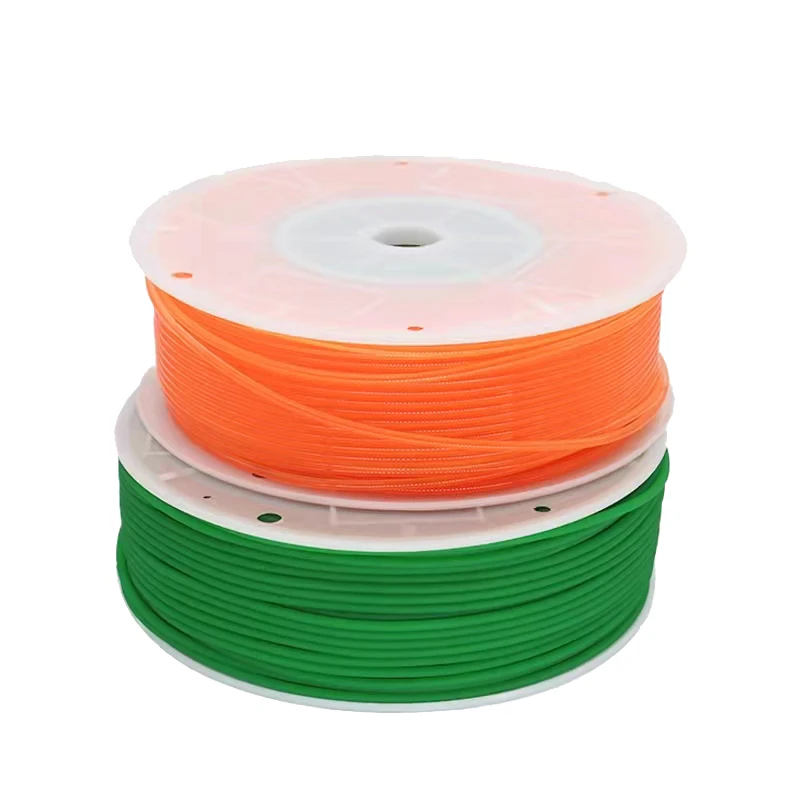
Endless round belts are continuous loop belts with no joint or splice, formed into a closed ring during manufacturing. Twisted round belts, by contrast, are open-ended lengths that are twisted and then joined on-site to form a loop. Each approach offers distinct advantages, and the best choice depends on your specific assembly line requirements, including pulley geometry, operating speed, and maintenance access.
Understanding the Core Differences in Belt Construction
How Endless Round Belts Are Made
Endless round belts are manufactured as seamless closed loops, typically from polyurethane or rubber compounds. Because endless round belts have no joint, they deliver smooth, vibration-free power transmission throughout the entire belt circumference. This seamless construction means endless round belts maintain consistent tension and cross-sectional integrity even under continuous high-cycle operation. For assembly lines that run at high speeds or handle sensitive components, endless round belts reduce the risk of product disruption caused by joint impact.
Endless round belts are available in a wide range of diameters and circumferences, and many suppliers offer endless round belts with custom cutting and processing to match exact conveyor dimensions. The material consistency of endless round belts also contributes to longer service life compared to belts with mechanical joints or field splices.
How Twisted Round Belts Function
Twisted round belts are cut from long coils and then twisted before being joined at their ends. The twist changes the contact geometry between belt and pulley, which can be useful when drive shafts are not parallel. In some conveyor configurations, twisted round belts allow directional changes without additional idler pulleys. However, the field joint in twisted round belts introduces a potential failure point, and the twist itself adds mechanical stress that shortens belt life under heavy loads.
Key Selection Criteria for Assembly Line Applications
Load Capacity and Drive Tension
Endless round belts are generally the stronger choice when your assembly line demands consistent tension and high load capacity. Because endless round belts have no weak joint zone, they distribute tension uniformly around the loop. This uniform distribution makes endless round belts ideal for conveyor systems that carry parts or products continuously without stopping. Twisted round belts can handle moderate loads, but their joints tend to fatigue faster when tension is applied repeatedly at high frequency.
When your production line operates multiple shifts per day, endless round belts offer a measurable advantage in durability. The absence of a joint means endless round belts resist the localized stress concentrations that cause twisted belt failures. For heavy-duty or high-throughput assembly lines, specifying endless round belts from the start reduces unplanned stoppages.
Speed, Precision, and Vibration Control
High-speed conveyors benefit significantly from endless round belts because the seamless loop eliminates the rhythmic bump that a joint creates at every revolution. In precision assembly applications, such as electronics or medical device manufacturing, endless round belts provide the smooth, stable motion that sensitive processes require. Even a minor vibration pulse from a twisted belt joint can cause misalignment or damage to delicate parts.
Twisted round belts, while acceptable at lower speeds, introduce measurable vibration at elevated RPM. If your line operates above moderate belt velocities, endless round belts are the technically superior option. Endless round belts also maintain their round cross-section more reliably under dynamic conditions, which preserves consistent pulley grip and tracking accuracy.
Installation Access and Maintenance Considerations
One area where twisted round belts retain an advantage is ease of field replacement. Because twisted round belts can be cut to length and joined on-site, they are practical when conveyor shafts are fixed and cannot be disassembled easily. In contrast, installing endless round belts typically requires the conveyor frame to be partially dismantled or the belt to be threaded through a specific path during assembly.
However, many assembly lines are designed or retrofitted specifically to accommodate endless round belts, because the long-term maintenance savings outweigh the more complex initial installation. When conveyors are built with removable bearing housings or split pulleys, installing endless round belts becomes straightforward. Planning your conveyor design around endless round belts from the start is the most efficient approach for new assembly line builds.
Matching Belt Type to Your Specific Assembly Line Context
When Endless Round Belts Are the Right Choice
Endless round belts are the preferred choice for assembly lines that prioritize uptime, precision, and longevity. If your conveyor runs continuously, carries consistent loads, and operates in a controlled environment, endless round belts will outperform twisted alternatives over the belt lifecycle. Polyurethane endless round belts are especially well-suited to food processing, electronics assembly, and light packaging lines where cleanliness, smooth motion, and dimensional stability matter.
Facilities that have standardized on a fixed set of conveyor belt sizes also benefit from stocking endless round belts, since they can be ordered in precise circumferences and stored ready for rapid replacement. Endless round belts with a solid cross-section and high-tensile construction deliver the reliability that modern assembly lines demand.
When Twisted Round Belts May Be Acceptable
Twisted round belts remain a practical option in low-speed, low-load auxiliary conveyors where installation access is restricted and belt replacement must be done without disassembly. They also suit applications where non-parallel shaft drives are required and no other mechanical solution is available. That said, even in these scenarios, it is worth evaluating whether redesigning the conveyor to accept endless round belts would provide better long-term economics.
FAQ
Can endless round belts be used on existing conveyors designed for twisted belts?
Yes, in many cases. If the conveyor allows the belt path to be threaded or the bearing housings to be removed, endless round belts can replace twisted belts. Custom-cut endless round belts matched to the exact circumference make retrofitting straightforward on most standard conveyor frames.
What materials are endless round belts typically made from?
Endless round belts are most commonly manufactured from polyurethane or rubber. Polyurethane endless round belts offer excellent abrasion resistance, oil resistance, and dimensional stability, making them suitable for demanding assembly line environments. High-tensile solid polyurethane endless round belts are widely used in conveyor and drive applications.
How do I determine the correct circumference for endless round belts on my line?
Measure the center-to-center distance between pulleys, add the pulley diameters multiplied by pi, and include any additional slack or tension allowance. Many suppliers of endless round belts offer custom cutting services, so you can specify the exact circumference needed for your conveyor without compromise.