EN
EN

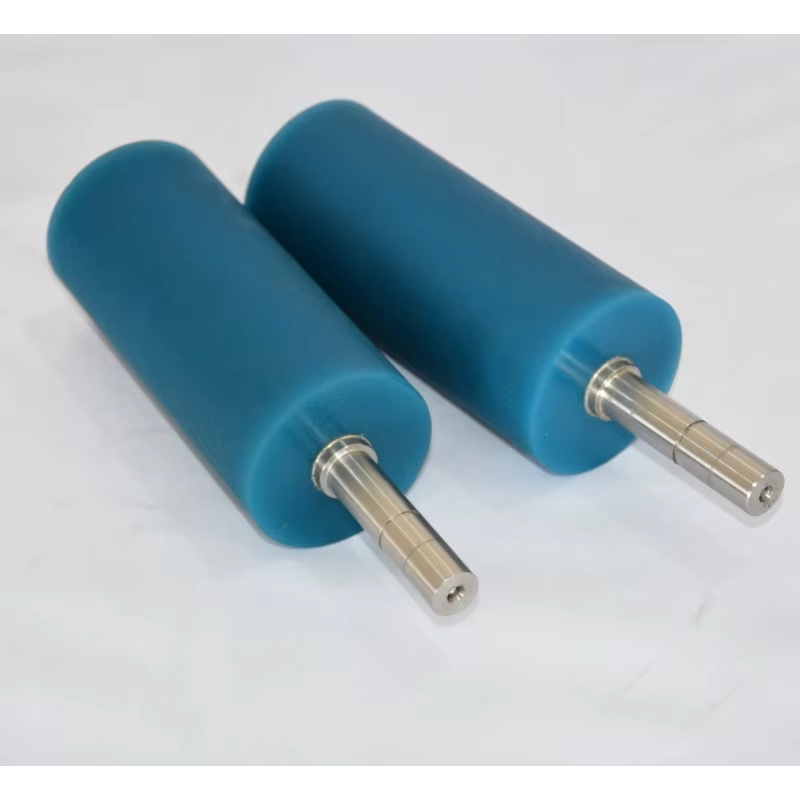
In heavy industrial applications where conveyor systems transport massive loads across production facilities, maintaining proper belt alignment becomes critical for operational efficiency and equipment longevity. When conveyor belts drift off-center under heavy loads, the resulting friction, wear, and potential system failures can cost manufacturers thousands in downtime and repairs. The solution lies in specialized vconveyor rollers that utilize geometric design principles to automatically guide belts back to their optimal running position, regardless of load weight or distribution irregularities.
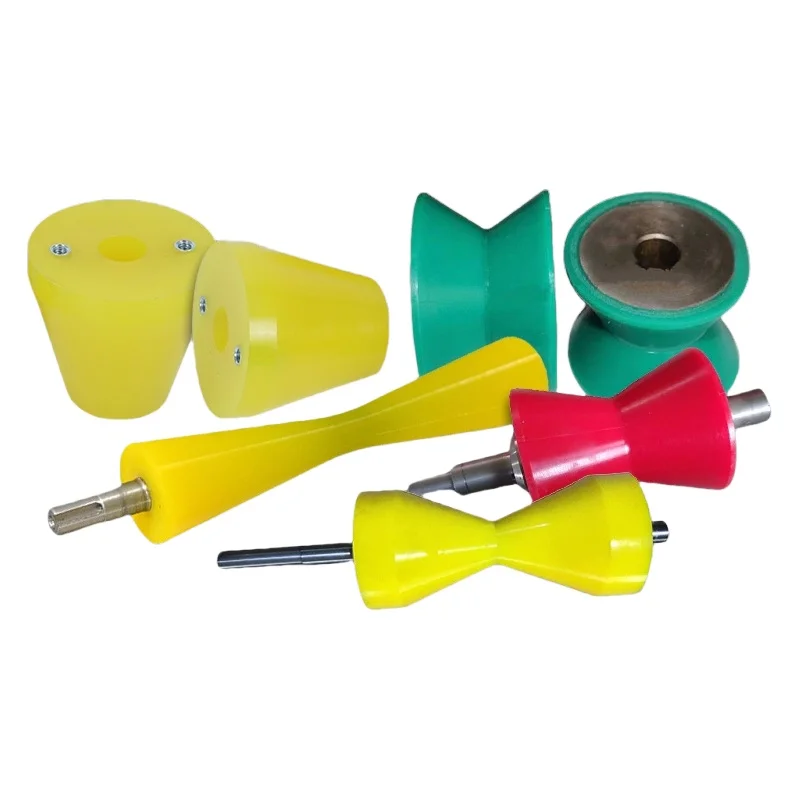
The self-centering mechanism of vconveyor rollers operates through a carefully engineered V-shaped profile that creates differential belt contact angles. When heavy industrial loads cause lateral belt movement, this geometric configuration generates corrective forces that naturally steer the belt back toward center position. This passive correction system eliminates the need for complex electronic tracking devices while providing reliable performance even under extreme loading conditions that would overwhelm traditional flat rollers.
Fundamental Principles Behind V-Roller Self-Centering Technology
Geometric Force Distribution in V-Shaped Roller Design
The effectiveness of vconveyor rollers in maintaining belt alignment stems from their distinctive V-shaped profile that creates asymmetric contact forces when belts begin to drift. Unlike conventional flat rollers that provide uniform support across their entire width, V-shaped rollers concentrate contact pressure along two angled surfaces. When a conveyor belt moves laterally under heavy load conditions, it climbs higher on one side of the V-groove while descending on the opposite side, creating an imbalanced force distribution.
This geometric arrangement generates a restoring moment that automatically corrects belt position through purely mechanical means. The steeper the V-angle, the stronger the centering force becomes, but engineers must balance this correction strength against belt wear considerations and power consumption requirements. Modern vconveyor rollers typically employ angles between 15 and 35 degrees to optimize self-centering performance while maintaining reasonable belt life in heavy-duty applications.
The mathematical relationship governing this centering action involves vector force analysis where the normal forces on each side of the V-groove create horizontal components that push the belt toward center position. Heavy industrial loads amplify these corrective forces proportionally, making vconveyor rollers particularly effective in applications where traditional tracking methods fail due to high belt tensions and variable loading patterns.
Load Transfer Mechanics Under Heavy Industrial Conditions
When heavy industrial loads traverse vconveyor rollers, the load transfer mechanism differs significantly from flat roller systems due to the concentrated contact areas along the V-groove flanks. The belt naturally settles into the valley of the V-shape, creating a cradle effect that stabilizes material positioning while maintaining the self-centering function. This dual action proves especially valuable when transporting bulk materials or large components that might otherwise shift during transport and cause belt misalignment.
The polyurethane coating commonly applied to industrial vconveyor rollers enhances this load transfer process by providing controlled friction characteristics and impact absorption. Under heavy loading conditions, the elastic properties of polyurethane allow slight deformation that increases contact area and distributes forces more evenly across the belt width. This deformation response also contributes to the self-centering action by creating a deeper V-groove under load that provides stronger lateral guidance forces.
Critical to heavy-duty performance is the roller's ability to maintain its geometric profile under sustained loading cycles. Quality vconveyor rollers incorporate robust internal structures with reinforced shaft assemblies and precision bearings that prevent deflection or wear that would compromise the V-shaped contact surface. This structural integrity ensures consistent self-centering performance throughout the roller's operational life, even when handling the demanding load conditions typical of mining, aggregate processing, and heavy manufacturing applications.
Engineering Design Features That Enable Heavy-Load Performance
Material Selection and Surface Treatment Technologies
The construction materials used in vconveyor rollers directly impact their ability to handle heavy industrial loads while maintaining self-centering functionality. Premium roller cores typically employ high-strength steel tubing with precisely machined V-groove profiles that maintain dimensional accuracy under extreme loading conditions. The core material must resist both radial compression forces from heavy loads and the cyclic stresses that occur as loaded belts traverse the roller surface thousands of times daily.
Polyurethane surface treatments have become the industry standard for heavy-duty vconveyor rollers due to their unique combination of wear resistance, impact absorption, and friction characteristics. The durometer rating of the polyurethane coating affects both the self-centering force generation and the roller's ability to withstand heavy loads without permanent deformation. Harder polyurethane formulations provide stronger centering forces and better load-bearing capacity, while softer compounds offer superior impact absorption and quieter operation.
Advanced vconveyor rollers may incorporate specialized surface textures or compounds designed to optimize performance under specific heavy-load conditions. Textured surfaces can improve belt grip and centering effectiveness in dusty environments, while specialized polymer formulations resist chemical attack from aggressive materials commonly transported in industrial applications. These material enhancements ensure reliable self-centering performance even when rollers operate in harsh environments with corrosive substances or extreme temperature variations.
Structural Engineering for Load Distribution and Durability
The internal structure of vconveyor rollers must accommodate the concentrated forces generated by heavy industrial loads while maintaining the precise geometric relationships essential for self-centering action. Advanced roller designs incorporate reinforced end caps and heavy-duty bearing assemblies that distribute loads effectively across the roller structure without compromising the V-groove profile. The bearing selection becomes critical in heavy-load applications, as standard ball bearings may prove inadequate for the radial and axial forces encountered.
Shaft design represents another critical engineering consideration for heavy-duty vconveyor rollers. Oversized shafts with appropriate material specifications prevent deflection under load that would alter the V-groove geometry and reduce centering effectiveness. Some manufacturers employ hollow shaft designs with internal reinforcement ribs to optimize strength-to-weight ratios while maintaining the structural rigidity required for consistent performance under varying load conditions.
The mounting and support system integration also influences heavy-load performance capabilities. vconveyor rollers designed for industrial applications often feature reinforced mounting brackets and adjustable positioning mechanisms that allow fine-tuning of roller alignment and spacing. These systems must accommodate the higher bearing loads and potential thermal expansion that occurs in heavy-duty operations while maintaining precise roller positioning essential for optimal self-centering performance.
Operational Mechanisms During Heavy Load Transport
Dynamic Response to Load Variations and Belt Drift
The self-centering response of vconveyor rollers becomes more pronounced under heavy loading conditions due to the increased normal forces between the belt and roller surfaces. When heavy materials create uneven load distributions across the belt width, the resulting lateral forces would cause significant drift in conventional flat roller systems. However, vconveyor rollers automatically compensate for these disturbances through their geometric centering mechanism, which strengthens proportionally with applied load.
During operation with heavy industrial loads, vconveyor rollers must respond to dynamic conditions including variable material placement, belt tension fluctuations, and thermal effects from continuous operation. The V-groove profile maintains its centering effectiveness across this range of operating conditions by providing consistent contact geometry regardless of minor variations in belt thickness or surface conditions. This stability proves essential in applications where load characteristics change throughout production cycles.
The centering response time of vconveyor rollers depends on several factors including roller spacing, belt tension, load distribution, and the specific V-groove angle. Under heavy loading conditions, the increased contact forces typically accelerate the centering response, allowing faster correction of belt drift incidents. This rapid response capability prevents minor misalignment issues from developing into serious belt tracking problems that could cause system shutdowns or equipment damage.
Integration with Conveyor System Components
Effective self-centering performance requires proper integration of vconveyor rollers within the overall conveyor system design. The spacing between successive rollers affects the system's ability to maintain belt alignment under heavy loads, as closer spacing provides more frequent centering corrections but increases system complexity and maintenance requirements. Engineers must balance these considerations based on the specific load characteristics and operational requirements of each application.
The interaction between vconveyor rollers and other conveyor components such as drive pulleys, tensioning systems, and support structures influences overall system performance under heavy loading conditions. Belt tensioning becomes particularly critical, as insufficient tension reduces the effectiveness of the centering forces generated by the V-groove geometry. Conversely, excessive tension can increase power consumption and accelerate component wear without providing proportional benefits in centering performance.
Modern conveyor systems often employ vconveyor rollers in combination with flat carry rollers and specialized impact rollers to optimize performance across different sections of the transport path. This hybrid approach allows engineers to place vconveyor rollers strategically at points where self-centering correction provides maximum benefit while using more economical flat rollers in sections where belt tracking remains stable under normal operating conditions.
Performance Advantages in Heavy Industrial Applications
Maintenance Reduction and Operational Reliability
The implementation of vconveyor rollers in heavy industrial applications significantly reduces maintenance requirements compared to conveyor systems relying on external belt tracking devices or frequent manual adjustments. The passive self-centering mechanism operates continuously without requiring electrical power, control systems, or regular calibration procedures. This reliability proves particularly valuable in remote installations or continuous production environments where unplanned maintenance activities result in substantial economic losses.
Heavy industrial loads often create challenging operating conditions that would quickly overwhelm active belt tracking systems through dust accumulation, vibration interference, or sensor fouling. Vconveyor rollers maintain their centering effectiveness despite these environmental challenges because their operation depends solely on mechanical geometry rather than electronic components. This inherent robustness translates to extended service intervals and reduced overall maintenance costs throughout the conveyor system's operational life.
The consistent belt alignment provided by vconveyor rollers also reduces wear on other conveyor components including belt edges, side guides, and structural supports. When belts remain properly centered during heavy load transport, the elimination of edge contact and friction reduces belt replacement frequency and extends the service life of expensive structural components. These secondary benefits often justify the initial investment in quality vconveyor rollers through long-term operational cost savings.
Energy Efficiency and System Optimization
Properly functioning vconveyor rollers contribute to overall conveyor system energy efficiency by maintaining optimal belt alignment that minimizes friction losses and power consumption. When heavy loads cause belt misalignment in systems with conventional flat rollers, the resulting edge contact and increased rolling resistance can significantly increase drive motor power requirements. The self-centering action of vconveyor rollers prevents these efficiency losses by maintaining proper belt tracking throughout the transport cycle.
The geometric design of vconveyor rollers also affects the rolling resistance characteristics compared to flat roller configurations. While the V-groove contact pattern may slightly increase rolling resistance under light loads, this effect becomes negligible under heavy loading conditions where the benefits of maintained alignment far outweigh any minor efficiency penalties. Modern polyurethane compounds and optimized V-groove geometries further minimize these resistance effects while preserving strong centering capabilities.
System optimization opportunities arise from the ability to design conveyor layouts with confidence in belt tracking performance when using quality vconveyor rollers. Engineers can specify longer conveyor sections, steeper inclines, and more complex routing configurations knowing that the self-centering mechanism will maintain belt alignment despite challenging operating conditions. This design flexibility often enables more efficient material flow patterns and reduced overall system complexity in heavy industrial installations.
FAQ
What load capacity can vconveyor rollers handle in industrial applications?
Industrial-grade vconveyor rollers can typically handle loads ranging from 1,000 to 5,000 pounds per linear foot of conveyor, depending on their construction specifications and roller spacing. Heavy-duty models with reinforced cores and premium bearing systems can accommodate even higher loads in specialized applications such as mining or steel production. The exact capacity depends on factors including roller diameter, shaft specifications, bearing type, and the specific load distribution characteristics of the transported materials.
How does the V-groove angle affect centering performance under heavy loads?
The V-groove angle directly influences the strength of the centering forces generated when belts begin to drift under heavy loading conditions. Steeper angles between 25-35 degrees provide stronger centering forces but may increase belt wear and power consumption. Shallower angles around 15-20 degrees offer gentler centering action with reduced belt stress but may prove insufficient for applications with severe loading irregularities or high belt tensions. Most heavy industrial applications utilize angles between 20-30 degrees to balance centering effectiveness with operational efficiency.
Can vconveyor rollers replace active belt tracking systems in heavy-duty applications?
Vconveyor rollers can effectively replace many active belt tracking systems in heavy-duty applications, particularly where environmental conditions make electronic tracking devices unreliable or maintenance-intensive. Their passive mechanical operation provides consistent performance without the vulnerability to dust, moisture, or vibration that affects electronic systems. However, extremely wide belts or applications with severe misalignment forces may still benefit from combining vconveyor rollers with strategically placed active tracking devices for optimal performance.
What maintenance is required for vconveyor rollers in heavy industrial service?
Maintenance requirements for vconveyor rollers in heavy industrial applications primarily involve periodic bearing lubrication, surface inspection for wear or damage, and verification of proper mounting alignment. The polyurethane surface should be inspected for cuts, gouges, or excessive wear that could compromise the V-groove profile. Bearing maintenance intervals typically range from 6-12 months depending on operating conditions and load factors. Unlike active tracking systems, vconveyor rollers require no electrical maintenance, sensor calibration, or control system adjustments, significantly reducing overall maintenance complexity and costs.
Table of Contents
- Fundamental Principles Behind V-Roller Self-Centering Technology
- Engineering Design Features That Enable Heavy-Load Performance
- Operational Mechanisms During Heavy Load Transport
- Performance Advantages in Heavy Industrial Applications
-
FAQ
- What load capacity can vconveyor rollers handle in industrial applications?
- How does the V-groove angle affect centering performance under heavy loads?
- Can vconveyor rollers replace active belt tracking systems in heavy-duty applications?
- What maintenance is required for vconveyor rollers in heavy industrial service?