EN
EN

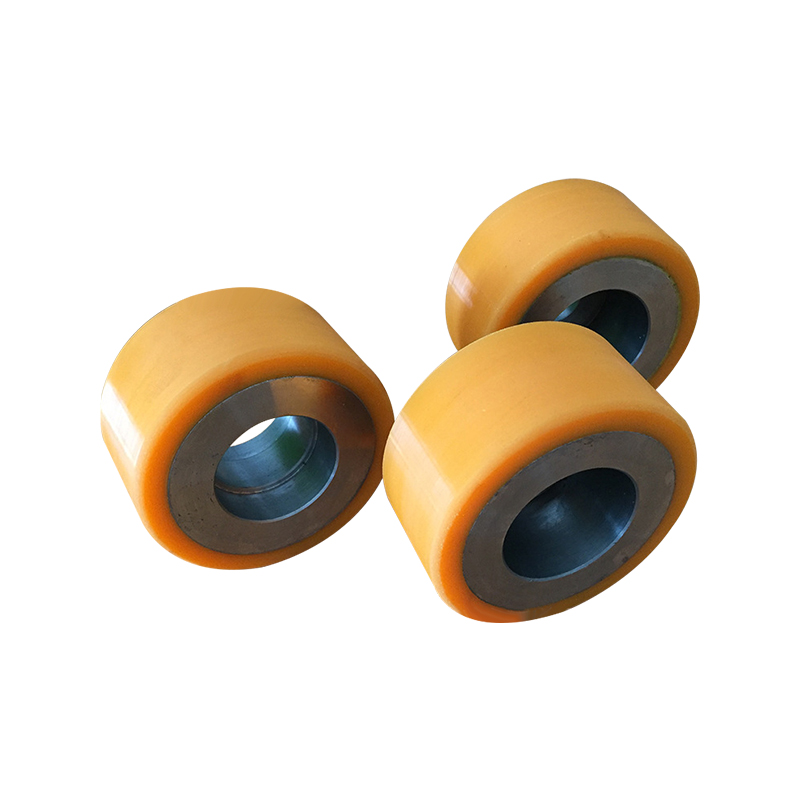
Every industrial operation that depends on a rubber roller knows the frustration of premature wear. A rubber roller that cracks, flattens, or hardens ahead of schedule forces unplanned downtime, inflates maintenance budgets, and disrupts precision processes in printing, conveying, and guiding applications. Understanding what ages a rubber roller prematurely — and how custom molding defeats those aging mechanisms — is the foundation of long-term operational reliability.
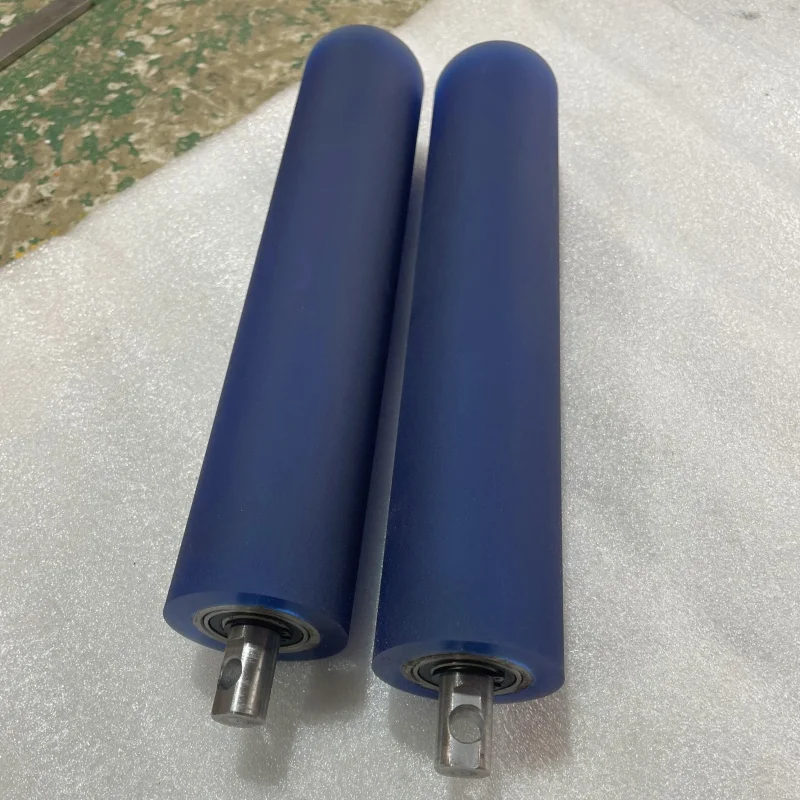
A custom-molded rubber roller is engineered from the first design stage to resist the exact stressors present in a given production environment. Unlike a standard off-the-shelf rubber roller, a custom rubber roller is formulated with the right durometer, compound chemistry, and geometric tolerances to match load profiles, surface contact conditions, and thermal cycles specific to each application. That precision alignment between design intent and operating reality is the core anti-aging secret that separates a long-lived rubber roller from one that fails early.
The Root Causes of Rubber Roller Aging
Compression Set and Surface Fatigue
The most common aging mechanism in a rubber roller is compression set — the permanent deformation that occurs when a rubber roller is held under load for extended periods and loses the elasticity needed to rebound fully. A rubber roller suffering from compression set develops flat spots that cause vibration, uneven contact pressure, and print or transfer defects. In conveyor and guide-wheel applications, a rubber roller with flat spots transmits shock loads that accelerate bearing and shaft wear throughout the entire assembly.
Surface fatigue is a parallel threat. Each rotation puts a rubber roller through a full stress-relaxation cycle, and repeated micro-deformation at the contact zone gradually degrades the polymer network. A rubber roller made with an incorrectly matched hardness absorbs energy inefficiently, which accelerates this fatigue mechanism. Custom formulation directly addresses both problems by selecting a polyurethane or rubber compound whose viscoelastic profile is matched to the rotational speed and contact pressure the rubber roller will actually experience.
Thermal and Chemical Degradation
Heat is an accelerant for nearly every aging pathway a rubber roller faces. Elevated temperatures cause oxidative crosslink scission in a rubber roller compound, reducing tensile strength and elongation at break. In printing environments, a rubber roller is routinely exposed to ink solvents, UV-curable chemistries, and cleaning agents, each of which can swell, harden, or chemically erode a rubber roller surface if the compound is not specifically resistant. A custom-molded rubber roller addresses this by selecting compound chemistry that has been validated against the exact fluids and temperatures the rubber roller will encounter in service.
How Custom Molding Extends Rubber Roller Service Life
Hardness and Compound Precision
The single most impactful design decision for a rubber roller is durometer selection. A rubber roller that is too soft will deform excessively under load, building internal heat and accelerating compression set. A rubber roller that is too hard transmits shock rather than absorbing it, causing surface cracking and premature delamination. Custom molding allows a rubber roller to be produced at exactly the durometer — whether Shore A 30, 60, 80, or beyond — that balances load absorption with dimensional stability for a specific application.
Polyurethane-based custom rubber roller compounds offer a wider usable hardness range than conventional rubber, combined with superior abrasion resistance, oil resistance, and tear strength. A polyurethane rubber roller can maintain its dimensional profile under continuous load far longer than a natural rubber roller of similar hardness, making it the preferred choice for high-cycle precision applications. When a rubber roller is produced to exact compound specifications, its aging curve becomes predictable and manageable rather than random and disruptive.
Dimensional Accuracy and Geometric Consistency
A custom-molded rubber roller is produced with tightly controlled outer-diameter tolerances, concentricity, and surface finish. These geometric factors are not merely cosmetic — a rubber roller with poor concentricity creates cyclic load variation that promotes fatigue at the shaft interface and at the rubber-to-core bond line. A rubber roller with uneven surface texture applies inconsistent contact pressure across the substrate width, causing differential wear that shortens effective service life even when the compound chemistry is correctly specified.
Custom molding ensures the rubber roller core, compound layer, and outer profile are integrated as a unified mechanical system. The bond between the rubber roller compound and its metal or plastic core is produced under controlled heat and pressure, eliminating the void and delamination risks that plague field-repaired or adhesively assembled rubber roller constructions. This structural integrity is a critical anti-aging factor that a commodity rubber roller simply cannot replicate.
Practical Maintenance Strategies for a Custom Rubber Roller
Condition Monitoring and Rotation Scheduling
Even the most precisely engineered rubber roller benefits from a structured condition monitoring program. Periodic measurement of a rubber roller's outer diameter and hardness detects early-stage compression set before it progresses to functional failure. In high-volume printing or conveyor systems, rotating a rubber roller across multiple positions in the machine distributes wear evenly, extending the interval between rubber roller replacements and reducing the per-unit cost of the rubber roller over the system's lifetime.
Storage and Handling Best Practices
Improper storage accelerates aging in a rubber roller even before it enters service. A rubber roller stored under compressive load, in direct sunlight, or in environments with elevated ozone concentrations will begin aging chemically before its first rotation. Best practice is to store each rubber roller horizontally in a climate-controlled space, free from contact with incompatible solvents or oils, and wrapped to block UV and ozone exposure. A rubber roller that enters service in pristine condition delivers its full designed service life rather than a shortened one degraded by avoidable storage damage.
FAQ
What hardness should I specify for a custom rubber roller in a precision printing application?
Most precision printing applications use a rubber roller in the Shore A 40–70 range, with softer compounds providing better ink transfer compliance and harder compounds improving dimensional stability at high speeds. The right hardness for your rubber roller depends on substrate type, impression pressure, and roller surface speed, and should be confirmed with your rubber roller manufacturer through application-specific testing.
How do I know when a rubber roller has reached the end of its service life?
A rubber roller should be evaluated for replacement when it shows measurable diameter reduction beyond tolerance, surface cracking deeper than superficial, hardness drift exceeding 5 Shore A points from the original specification, or visible delamination at the core bond line. Any of these conditions in a rubber roller will compromise process quality and should prompt immediate assessment.
Can a custom rubber roller be re-ground or re-coated to extend its life further?
In many cases, a rubber roller can be re-ground to restore dimensional accuracy if the compound layer retains sufficient thickness and hardness after grinding. Re-coating a rubber roller with a fresh compound layer over the existing core is also possible when the core structure remains sound. Both options can be cost-effective for large-diameter rubber roller constructions, but should only be performed by a qualified rubber roller specialist to ensure bond integrity and dimensional precision.