EN
EN

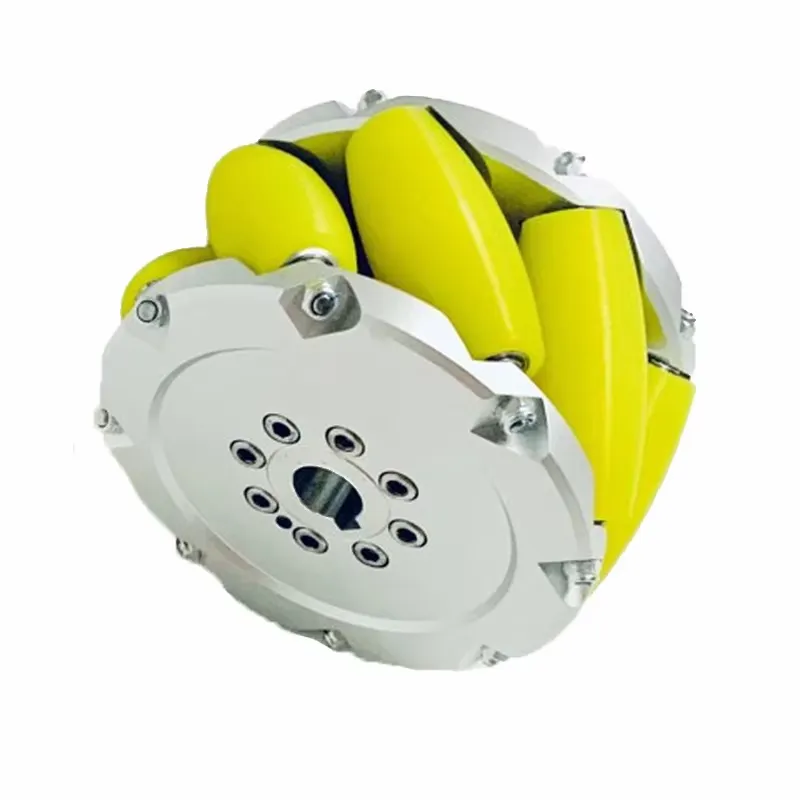
In the world of automated guided vehicles (AGVs), traditional wheels impose fundamental limitations on movement patterns. Conventional designs require AGVs to follow predictable forward-backward and turning sequences, creating inefficiencies in tight warehouse spaces and complex industrial environments. This constraint forces engineers to compromise between maneuverability and operational efficiency, often resulting in longer cycle times and reduced productivity in automated material handling systems.
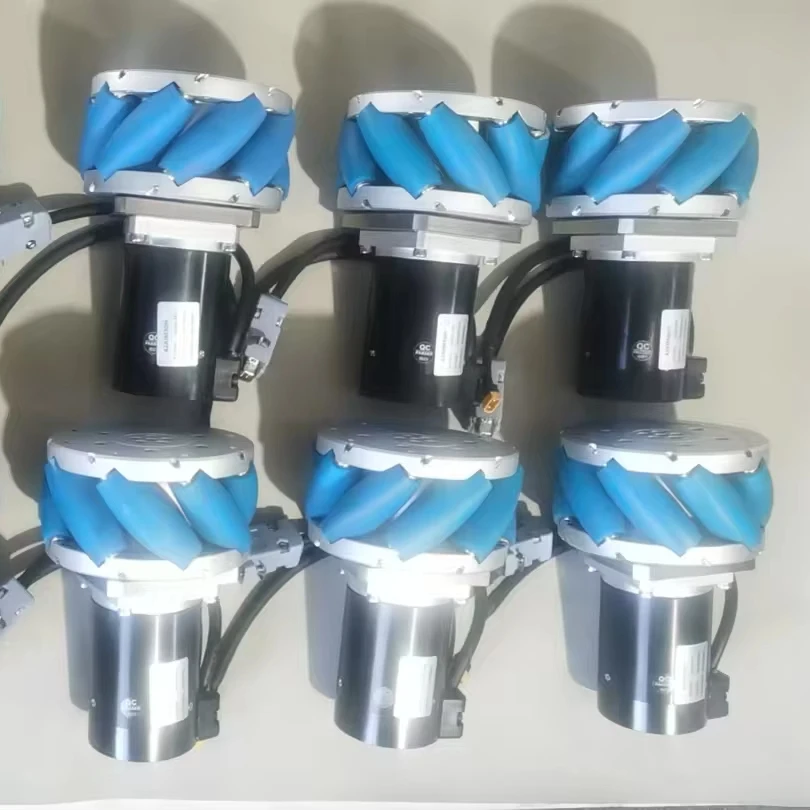
Mecanum wheels represent a revolutionary approach to AGV mobility, fundamentally changing how automated vehicles navigate industrial environments. Unlike traditional wheel systems that limit movement to forward, backward, and rotational motions, mecanum wheels enable true omnidirectional movement, allowing AGVs to move laterally, diagonally, and rotate in place without changing orientation. This transformative capability stems from their unique roller-based design, which effectively eliminates the geometric constraints that have historically limited AGV agility in complex operational scenarios.
The Engineering Breakthrough Behind 360-Degree Movement
Unique Roller Configuration and Physics Principles
The revolutionary design of mecanum wheels centers around angled rollers positioned at precisely 45-degree angles around the wheel's circumference. These rollers create a complex vector system that allows forces to be decomposed into multiple directional components simultaneously. When four mecanum wheels work together on an AGV platform, they generate a comprehensive range of motion vectors that enable movement in any direction without requiring the vehicle to change its orientation or execute complex turning maneuvers.
Each roller on a mecanum wheel functions as an independent contact point with the ground, creating friction vectors that can be mathematically combined to produce the desired movement direction. The 45-degree angle is critical because it allows the decomposition of rotational force into both forward-backward and lateral components. This engineering principle transforms the traditional limitations of wheeled vehicles, enabling AGVs equipped with mecanum wheels to achieve unprecedented maneuverability in confined industrial spaces.
The synchronization between multiple mecanum wheels requires precise motor control algorithms that calculate individual wheel speeds and directions to achieve the desired vehicle movement. Advanced control systems monitor each wheel's rotation independently, adjusting speed differentials in real-time to maintain smooth omnidirectional motion. This sophisticated coordination enables AGVs to execute complex path planning strategies that would be impossible with conventional wheel configurations.
Material Science and Durability Considerations
Modern mecanum wheels incorporate advanced polyurethane materials that provide optimal balance between grip, durability, and load-bearing capacity. The roller surfaces require specific hardness characteristics to maintain consistent ground contact while withstanding the lateral forces generated during omnidirectional movement. Industrial-grade mecanum wheels utilize specialized compounds that resist wear patterns unique to multi-directional rolling, ensuring long-term performance in demanding warehouse and manufacturing environments.
The hub and bearing systems in professional mecanum wheels must accommodate complex force distributions that differ significantly from traditional wheels. High-precision bearings enable smooth roller rotation while maintaining structural integrity under varied loading conditions. The integration of sealed bearing systems protects against contamination in industrial environments, ensuring consistent performance across extended operational periods.
Temperature stability becomes crucial for mecanum wheels operating in diverse industrial conditions. Quality polyurethane formulations maintain consistent performance characteristics across wide temperature ranges, preventing degradation that could affect the precision required for omnidirectional movement. This reliability factor directly impacts AGV system uptime and operational efficiency in automated material handling applications.
Operational Advantages in Industrial AGV Applications
Space Efficiency and Warehouse Optimization
The primary advantage of mecanum wheels in AGV systems lies in their ability to dramatically reduce the space requirements for vehicle maneuvering. Traditional AGVs require significant clearance areas for turning operations, limiting warehouse layout optimization and reducing storage density. Mecanum wheels eliminate these spatial constraints by enabling AGVs to move sideways into tight spaces, navigate around obstacles without turning, and position themselves precisely without requiring additional maneuvering room.
This enhanced maneuverability translates directly into increased warehouse utilization rates. AGV systems equipped with mecanum wheels can operate effectively in narrower aisles, access storage locations that would be unreachable with conventional vehicles, and maintain higher inventory density without sacrificing automation capabilities. The ability to move laterally allows for more efficient rack access patterns and reduces the need for wide turning areas that consume valuable storage space.
Operational efficiency gains extend beyond space utilization to include reduced cycle times for material handling tasks. AGVs with mecanum wheels can approach target locations from any angle, eliminating the time-consuming positioning sequences required by conventional vehicles. This efficiency improvement becomes particularly significant in high-throughput operations where cycle time reductions directly impact overall system productivity and cost-effectiveness.
Precision Positioning and Manufacturing Integration
The precision capabilities of mecanum wheels enable AGVs to achieve exact positioning requirements that are critical in manufacturing and assembly applications. The ability to make minute adjustments in any direction allows AGVs to align precisely with production equipment, conveyor systems, and assembly stations without complex repositioning sequences. This precision capability is essential for automated manufacturing processes that require tight tolerances and consistent positioning accuracy.
Manufacturing integration benefits extend to collaborative robotics applications where AGVs must work alongside human operators and stationary equipment. Mecanum wheels enable smooth, predictable movement patterns that enhance safety and operational predictability in shared workspace environments. The ability to move laterally and maintain orientation allows AGVs to avoid interference with other equipment while maintaining optimal positioning for material transfer operations.
Quality control and inspection processes benefit significantly from the positioning capabilities of mecanum wheels-equipped AGVs. These vehicles can position sensors and cameras at optimal angles without complex maneuvering, enabling more efficient automated inspection sequences. The precise control over vehicle orientation and position supports advanced quality assurance protocols that require consistent measurement and inspection positioning.
Implementation Strategies for Maximum Agility Benefits
Control System Integration and Path Planning
Successful implementation of mecanum wheels in AGV systems requires sophisticated control algorithms that can effectively coordinate the complex interactions between multiple wheels. Advanced path planning software must account for the unique movement capabilities of mecanum wheels, optimizing routes to take advantage of omnidirectional movement while avoiding obstacles and maintaining operational efficiency. These systems typically integrate machine learning algorithms that continuously improve path optimization based on operational experience and environmental changes.
Real-time sensor integration becomes critical for maximizing the agility advantages of mecanum wheels. LIDAR, ultrasonic, and vision systems must work together to provide comprehensive environmental awareness that enables safe omnidirectional movement in dynamic warehouse environments. The control system must process sensor data rapidly enough to make real-time adjustments to wheel speeds and directions, ensuring smooth operation even in complex scenarios with moving obstacles and changing operational conditions.
Fleet coordination algorithms must be adapted to take advantage of the enhanced maneuverability provided by mecanum wheels. Traditional AGV fleet management systems assume conventional movement patterns, but mecanum wheels-equipped vehicles can follow more complex and efficient paths. Advanced coordination systems can optimize multi-vehicle operations by leveraging the unique movement capabilities to reduce conflicts and improve overall system throughput.
Maintenance Protocols and Operational Optimization
The unique design characteristics of mecanum wheels require specialized maintenance protocols that differ from conventional wheel systems. Regular inspection of roller condition, bearing performance, and alignment becomes critical for maintaining optimal omnidirectional performance. Maintenance schedules must account for the increased complexity of mecanum wheels while ensuring that wear patterns are detected and addressed before they impact operational efficiency.
Calibration procedures for mecanum wheels-equipped AGVs involve complex alignment processes that ensure all four wheels work in perfect coordination. Advanced diagnostic systems monitor individual wheel performance and detect deviations that could affect movement precision. Regular calibration ensures that the mathematical relationships between wheel rotations and vehicle movement remain accurate, maintaining the precision advantages that make mecanum wheels valuable in industrial applications.
Performance optimization strategies focus on maximizing the agility advantages while maintaining operational reliability. This includes fine-tuning acceleration profiles, optimizing movement algorithms for specific operational scenarios, and implementing predictive maintenance protocols that prevent downtime. The goal is to maintain the superior maneuverability characteristics of mecanum wheels while ensuring long-term operational stability in demanding industrial environments.
Cost-Benefit Analysis and Return on Investment
Initial Investment Considerations and Long-term Value
The implementation of mecanum wheels in AGV systems typically requires higher initial capital investment compared to conventional wheel configurations. This cost differential stems from the complexity of the wheel design, precision manufacturing requirements, and specialized control systems needed to coordinate omnidirectional movement. However, this initial investment must be evaluated against the long-term operational benefits and efficiency gains that mecanum wheels provide in industrial automation applications.
Cost justification for mecanum wheels often centers on space utilization improvements and operational efficiency gains that directly impact facility productivity. The ability to operate in narrower aisles and tighter spaces can significantly increase warehouse storage capacity, providing measurable return on investment through improved space utilization rates. Additionally, reduced cycle times and improved material handling efficiency contribute to higher throughput and lower operational costs over the system lifecycle.
Long-term maintenance costs must be factored into the total cost of ownership analysis for mecanum wheels-equipped AGVs. While these systems may require specialized maintenance expertise and replacement parts, the operational efficiency gains often offset these additional costs. The key is ensuring that maintenance protocols are properly implemented and that staff are adequately trained to support the more complex wheel systems throughout their operational lifespan.
Productivity Improvements and Operational Efficiency
The productivity improvements achieved through mecanum wheels implementation can be substantial in appropriate applications. Reduced maneuvering time, improved space utilization, and enhanced positioning accuracy all contribute to higher overall system efficiency. These improvements are particularly significant in high-density storage environments and complex manufacturing operations where traditional AGVs face mobility constraints that limit operational effectiveness.
Operational flexibility provided by mecanum wheels enables AGV systems to adapt more effectively to changing facility layouts and operational requirements. This adaptability reduces the need for system modifications and infrastructure changes when operational patterns evolve. The ability to modify AGV routes and operational patterns without physical facility changes provides long-term operational advantages that contribute to sustained return on investment.
Competitive advantages in automated material handling often justify the investment in mecanum wheels technology. Facilities equipped with highly maneuverable AGV systems can achieve higher operational efficiency, better space utilization, and improved customer service levels. These competitive benefits often translate into measurable business advantages that support the investment in advanced wheel technology and justify the associated implementation costs.
FAQ
How do mecanum wheels achieve 360-degree movement capability?
Mecanum wheels achieve omnidirectional movement through their unique design featuring angled rollers positioned at 45-degree angles around the wheel circumference. When four mecanum wheels are coordinated on an AGV, the individual wheel rotations create force vectors that can be combined to produce movement in any direction without changing the vehicle's orientation.
What are the main advantages of mecanum wheels compared to traditional AGV wheels?
The primary advantages include the ability to move laterally and diagonally without turning, precise positioning capabilities, reduced space requirements for maneuvering, improved operational efficiency in tight spaces, and the ability to maintain orientation while moving in any direction. These capabilities enable higher warehouse density and more efficient material handling operations.
Are mecanum wheels suitable for all types of AGV applications?
Mecanum wheels are particularly beneficial in applications requiring high maneuverability, precise positioning, and operation in confined spaces such as warehouses, manufacturing facilities, and assembly operations. However, they may not be optimal for applications requiring high-speed travel over long distances or operations on uneven surfaces where conventional wheels might provide better performance.
What maintenance considerations are specific to mecanum wheels?
Mecanum wheels require regular inspection of roller condition, bearing performance, and wheel alignment to maintain optimal omnidirectional performance. Specialized calibration procedures ensure proper coordination between all four wheels, and maintenance staff need training on the unique characteristics of mecanum wheel systems to ensure long-term operational reliability.