EN
EN

The logistics industry stands at a transformative crossroads where traditional material handling methods are giving way to revolutionary omnidirectional movement technologies. Mecanum wheels represent the breakthrough solution that addresses the most pressing challenges facing modern warehouses and factories, from space optimization to precision maneuvering in confined environments. These specialized wheel systems are fundamentally reshaping how goods move through distribution centers and manufacturing facilities by enabling unprecedented flexibility in robotic and automated guided vehicle applications.
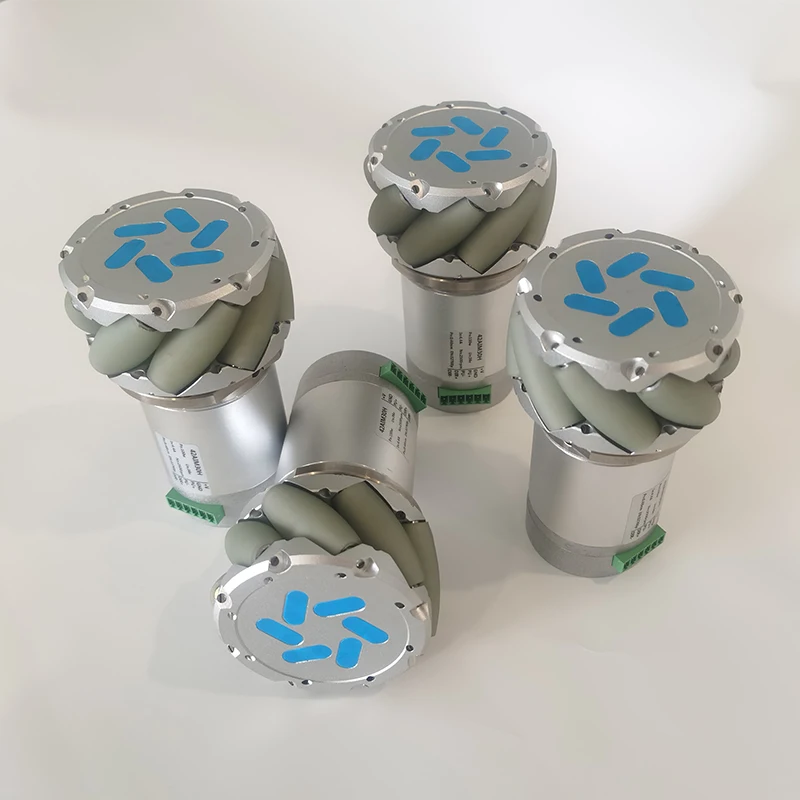
As warehouse automation accelerates and factory floor layouts become increasingly complex, the limitations of conventional wheels create bottlenecks that mecanum wheels definitively solve. The ability to move sideways, diagonally, and rotate in place while carrying substantial loads positions these innovative wheel assemblies as the cornerstone technology for next-generation logistics operations. Understanding why mecanum wheels are becoming indispensable requires examining their unique operational advantages and the specific logistics challenges they address across the entire supply chain spectrum.
Revolutionary Movement Capabilities Transform Logistics Operations
Omnidirectional Freedom Eliminates Traditional Movement Constraints
Mecanum wheels deliver unparalleled omnidirectional movement that completely eliminates the turning radius limitations plaguing conventional wheel systems in logistics applications. Unlike traditional wheels that require vehicles to follow predetermined paths and execute time-consuming multi-point turns, mecanum wheels enable instant lateral movement, diagonal travel, and zero-radius rotation. This revolutionary capability transforms how automated guided vehicles navigate through narrow warehouse aisles, around stationary obstacles, and within tight manufacturing cell configurations.
The unique roller design of mecanum wheels creates force vectors that can be precisely controlled to generate movement in any direction without changing the vehicle's orientation. This translates directly into faster material handling operations, reduced cycle times, and the ability to utilize previously inaccessible warehouse spaces. Logistics managers report productivity improvements of 30-40% when implementing mecanum wheels on their automated material handling equipment compared to conventional wheeled systems.
Precision Positioning Enables Advanced Automation Integration
The exceptional precision control offered by mecanum wheels makes them indispensable for sophisticated warehouse automation systems that demand millimeter-accurate positioning. Automated storage and retrieval systems, robotic picking stations, and conveyor interface points all benefit from the precise control characteristics that mecanum wheels provide. The ability to make micro-adjustments in any direction ensures perfect alignment with docking stations, loading interfaces, and precision assembly positions.
Modern logistics operations increasingly rely on collaborative robots and autonomous mobile robots that must interact seamlessly with existing infrastructure and human workers. Mecanum wheels provide the smooth, predictable movement patterns essential for safe human-robot collaboration while maintaining the positioning accuracy required for automated inventory management systems. This precision capability directly supports the implementation of Industry 4.0 technologies and smart factory initiatives that depend on reliable, accurate material movement.
Space Optimization Drives Competitive Advantage in Modern Facilities
Narrow Aisle Navigation Maximizes Storage Density
Warehouse real estate costs continue rising while customer demands for faster order fulfillment intensify, making space optimization critical for logistics competitiveness. Mecanum wheels enable material handling equipment to operate effectively in significantly narrower aisles than conventional wheeled vehicles, directly increasing usable storage capacity. Traditional forklifts and automated guided vehicles require wide turning areas and approach angles that consume valuable floor space, while mecanum wheel systems can navigate aisles as narrow as the vehicle width plus minimal clearance.
The sideways movement capability of mecanum wheels eliminates the need for traditional turning spaces at aisle ends, allowing warehouse designers to extend storage racks closer to facility walls and create more efficient layouts. This space optimization can increase storage density by 15-25% in typical warehouse configurations, providing substantial return on investment through increased inventory capacity without facility expansion. The economic impact becomes particularly significant in high-rent urban distribution centers where every square foot directly affects operational costs.
Flexible Layout Adaptation Supports Dynamic Operations
Modern logistics operations must adapt quickly to changing product mixes, seasonal demand fluctuations, and evolving customer requirements. Mecanum wheels provide the movement flexibility essential for reconfigurable warehouse layouts and adaptable manufacturing cells. Equipment mounted on mecanum wheels can be repositioned efficiently without requiring specialized moving equipment or extensive downtime, enabling rapid response to operational changes.
The ability to move equipment laterally and diagonally simplifies facility reconfiguration processes that would otherwise require complex choreography with conventional wheeled systems. Manufacturing facilities implementing lean production principles particularly benefit from mecanum wheels' flexibility in supporting cellular manufacturing layouts and just-in-time material flow patterns. This adaptability becomes increasingly valuable as companies embrace mass customization strategies that require frequent production line adjustments.
Load Handling Efficiency Transforms Material Movement Economics
Heavy Duty Performance Meets Industrial Demands
Industrial logistics applications require wheel systems capable of handling substantial loads while maintaining precise control and durability under continuous operation. Mecanum wheels engineered for logistics applications incorporate robust construction materials and advanced bearing systems that support payload capacities ranging from several hundred pounds to multiple tons. The distributed load characteristics of four-wheel mecanum systems provide stable platform performance even when handling uneven or shifting loads common in warehouse and manufacturing environments.
The polyurethane roller construction typically used in industrial mecanum wheels offers superior wear resistance compared to traditional rubber wheels while providing the grip characteristics necessary for reliable load movement on various floor surfaces. This durability translates directly into lower maintenance costs and extended operational life, critical factors in 24/7 logistics operations where equipment downtime directly impacts productivity and customer service levels.
Multi-Directional Load Transfer Enhances Throughput
Conventional material handling systems often require multiple positioning movements to align loads properly for transfer between conveyors, storage locations, and processing stations. Mecanum wheels eliminate many of these intermediate positioning steps by enabling direct lateral and diagonal load placement, significantly reducing handling time and increasing throughput. The ability to approach loading and unloading positions from multiple angles provides operational flexibility that conventional systems cannot match.
Automated guided vehicles equipped with mecanum wheels can execute complex loading patterns that would require multiple vehicles or extensive maneuvering with traditional wheel systems. This capability proves particularly valuable in cross-docking operations where rapid load transfer between different transportation modes creates time-sensitive bottlenecks. The improved throughput directly supports faster order fulfillment and reduced logistics costs across the supply chain.
Technology Integration Accelerates Smart Logistics Implementation
Sensor Fusion Compatibility Enables Advanced Navigation
The precise control characteristics of mecanum wheels make them ideal platforms for advanced sensor integration and autonomous navigation systems. LiDAR sensors, vision systems, and inertial measurement units work more effectively with mecanum wheel platforms because the predictable motion characteristics enable more accurate sensor fusion and path planning algorithms. The ability to move in any direction without changing orientation simplifies obstacle avoidance and dynamic path planning in complex warehouse environments.
Modern warehouse management systems increasingly rely on real-time location tracking and automated inventory management that require precise vehicle positioning and predictable movement patterns. Mecanum wheels provide the motion control foundation necessary for implementing sophisticated tracking systems and automated workflow optimization. The technology compatibility ensures that mecanum wheel systems can evolve with advancing automation technologies rather than becoming obsolete as operational requirements change.
Artificial Intelligence Integration Optimizes Route Efficiency
Machine learning algorithms that optimize material handling routes and schedules work more effectively when paired with mecanum wheel systems capable of executing complex movement patterns. The omnidirectional capability allows AI-driven logistics systems to implement optimal paths that would be impossible with conventional wheeled vehicles, resulting in shorter travel distances and reduced energy consumption. This optimization becomes particularly valuable in large distribution centers where small improvements in route efficiency scale to significant operational savings.
The predictable response characteristics of mecanum wheels enable more accurate motion planning and collision avoidance algorithms essential for autonomous vehicle fleets operating in shared spaces. As logistics operations increasingly adopt collaborative robotics and mixed human-automated workflows, the smooth, controllable movement patterns provided by mecanum wheels become critical for maintaining safety and efficiency standards in dynamic environments.
Economic Impact Drives Widespread Adoption Across Industries
Return on Investment Justifies Technology Transition
The financial benefits of implementing mecanum wheels in logistics operations typically justify the technology investment within 12-18 months through a combination of productivity improvements, space optimization, and reduced operational costs. Higher initial equipment costs are offset by decreased labor requirements, improved throughput, and reduced facility expenses. Companies transitioning from conventional material handling systems report substantial savings in training costs since mecanum wheel systems often require less specialized operator skills and provide more intuitive control interfaces.
Energy efficiency improvements associated with mecanum wheels contribute to ongoing operational cost reductions, particularly important in facilities operating large fleets of material handling equipment. The precise movement control eliminates unnecessary acceleration and deceleration cycles common with conventional systems, reducing power consumption and extending battery life in electric vehicles. These efficiency gains become increasingly significant as energy costs rise and sustainability initiatives drive operational decision-making.
Competitive Positioning Through Superior Customer Service
Logistics companies implementing mecanum wheel technology gain competitive advantages through improved order fulfillment speed and accuracy that directly enhance customer satisfaction. The faster, more precise material handling capabilities enable shorter order-to-shipment cycles and reduced error rates that customers increasingly demand in competitive markets. The ability to handle rush orders and complex picking requirements more efficiently allows companies to command premium pricing for superior service levels.
The operational flexibility provided by mecanum wheels enables logistics providers to adapt quickly to customer requirement changes and seasonal demand fluctuations without major infrastructure investments. This adaptability becomes a significant competitive differentiator as customers seek logistics partners capable of supporting their own business growth and changing requirements. The technology investment positions companies to capture market share in rapidly evolving logistics markets where responsiveness and reliability determine success.
FAQ
What maintenance requirements do mecanum wheels have in continuous logistics operations?
Mecanum wheels designed for logistics applications typically require minimal maintenance beyond regular inspection of roller condition and bearing lubrication. The polyurethane rollers should be checked monthly for wear patterns and debris accumulation, while bearing assemblies generally require lubrication every 6-12 months depending on operating conditions. Properly maintained mecanum wheels can operate continuously for 2-3 years before requiring roller replacement, making them highly cost-effective for 24/7 logistics operations.
How do mecanum wheels perform on different warehouse floor surfaces?
Industrial mecanum wheels perform excellently on concrete, epoxy-coated, and polished warehouse floors commonly found in modern facilities. The polyurethane roller material provides optimal traction on smooth surfaces while minimizing floor wear and noise levels. Performance remains consistent on slightly uneven surfaces, though very rough or heavily textured floors may reduce efficiency. For optimal performance, warehouse floors should be maintained with minimal debris and reasonable smoothness standards typical of modern logistics facilities.
What load capacity limitations should be considered when implementing mecanum wheels?
Modern mecanum wheel assemblies can support loads ranging from 500 pounds to over 10,000 pounds per wheel depending on design specifications and construction materials. Total system capacity depends on the number of wheels and their individual ratings, with four-wheel systems commonly supporting 2,000 to 40,000 pound payloads. Load distribution and dynamic loading factors must be considered during system design to ensure reliable performance under actual operating conditions including acceleration and directional changes.
How do mecanum wheels integrate with existing warehouse management systems?
Mecanum wheel vehicles integrate seamlessly with existing warehouse management systems through standard communication protocols and control interfaces. Most industrial mecanum wheel systems support common fieldbus communications, Ethernet connectivity, and wireless control options compatible with major WMS platforms. The omnidirectional movement capabilities often enhance WMS efficiency by enabling more direct routing and flexible task assignment algorithms that conventional wheeled vehicles cannot support.
Table of Contents
- Revolutionary Movement Capabilities Transform Logistics Operations
- Space Optimization Drives Competitive Advantage in Modern Facilities
- Load Handling Efficiency Transforms Material Movement Economics
- Technology Integration Accelerates Smart Logistics Implementation
- Economic Impact Drives Widespread Adoption Across Industries
-
FAQ
- What maintenance requirements do mecanum wheels have in continuous logistics operations?
- How do mecanum wheels perform on different warehouse floor surfaces?
- What load capacity limitations should be considered when implementing mecanum wheels?
- How do mecanum wheels integrate with existing warehouse management systems?