EN
EN
Modern industrial applications demand materials that can withstand extreme conditions while maintaining optimal performance characteristics. Polyurethane extruded profiles have emerged as the go-to solution for industries requiring superior shock absorption capabilities. These versatile components combine the durability of traditional materials with the flexibility needed to handle dynamic loads and impact forces. From manufacturing equipment to automotive applications, polyurethane extruded profiles deliver consistent performance where conventional materials often fail.
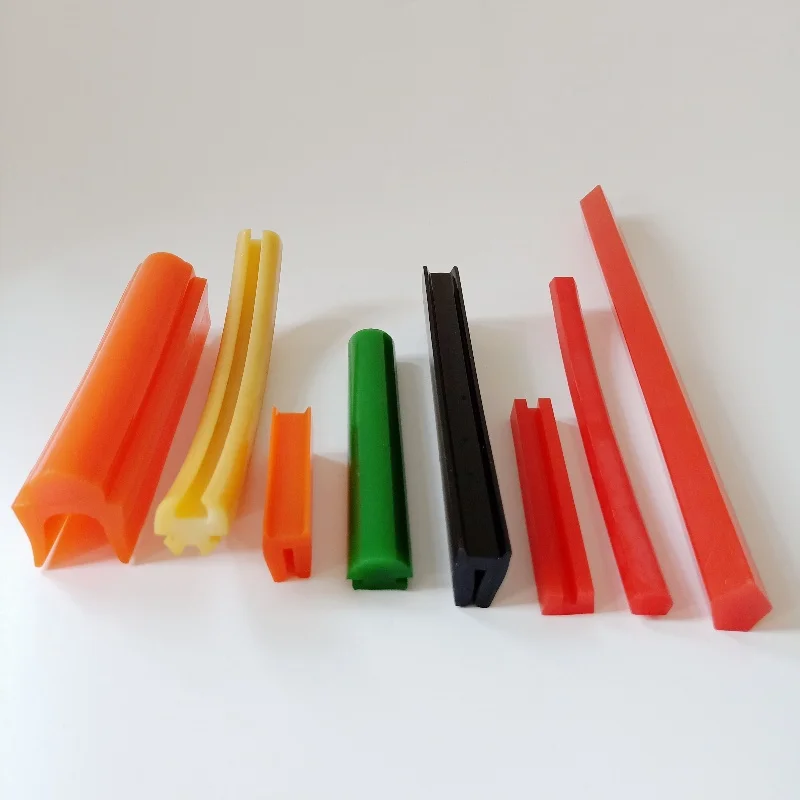
The unique molecular structure of polyurethane allows manufacturers to create custom profiles that excel in shock absorption while maintaining structural integrity. Unlike rubber or plastic alternatives, polyurethane extruded profiles offer superior resistance to wear, chemicals, and temperature variations. This combination of properties makes them indispensable in applications where equipment protection and operational reliability are paramount concerns.
Understanding Polyurethane Material Properties
Chemical Composition and Structure
The exceptional shock absorption capabilities of polyurethane extruded profiles stem from their unique polymer structure. Polyurethane consists of alternating hard and soft segments that create a microphase-separated morphology. The hard segments provide structural strength and shape retention, while the soft segments contribute to flexibility and energy dissipation. This dual-phase structure allows polyurethane extruded profiles to absorb and distribute impact energy effectively across their surface area.
The crosslinking density in polyurethane can be precisely controlled during manufacturing, enabling engineers to tailor the material properties for specific shock absorption requirements. Higher crosslink density results in increased hardness and load-bearing capacity, while lower density provides enhanced flexibility and energy absorption. This tunability makes polyurethane extruded profiles suitable for a wide range of applications requiring different levels of shock protection.
Mechanical Performance Characteristics
Polyurethane extruded profiles exhibit exceptional mechanical properties that contribute to their shock absorption effectiveness. The material demonstrates high tear strength, excellent abrasion resistance, and superior load-bearing capacity compared to conventional elastomers. These characteristics ensure that the profiles maintain their shock absorption capabilities even under repeated impact loading conditions.
The hysteresis properties of polyurethane allow it to convert kinetic energy from impacts into heat energy, effectively dampening vibrations and reducing transmitted forces. This energy dissipation mechanism prevents damage to sensitive equipment and structures while maintaining the integrity of the protective profile itself. The material's ability to return to its original shape after deformation ensures consistent performance throughout the component's service life.
Manufacturing Processes and Customization Options
Extrusion Technology and Quality Control
The production of high-quality polyurethane extruded profiles requires sophisticated manufacturing processes and stringent quality control measures. Modern extrusion equipment allows for precise control of material flow rates, temperature profiles, and cooling rates to ensure consistent cross-sectional geometry and material properties. Advanced monitoring systems track critical parameters throughout the extrusion process to maintain product quality and dimensional accuracy.
Quality control testing for polyurethane extruded profiles includes durometer measurements, tensile strength testing, and compression set evaluations. These tests verify that the profiles meet specified shock absorption requirements and performance standards. Manufacturers also conduct accelerated aging tests to ensure long-term performance stability under various environmental conditions.
Custom Profile Design and Engineering
The versatility of polyurethane extrusion allows for the creation of complex profile geometries tailored to specific shock absorption applications. Engineers can incorporate features such as hollow sections, ribs, and variable thickness zones to optimize energy absorption characteristics. Custom polyurethane extruded profiles can be designed with integrated mounting features, connection points, and alignment guides to simplify installation and improve system performance.
Advanced computer modeling and finite element analysis enable engineers to optimize profile designs before production begins. These tools allow for the prediction of stress distributions, deformation patterns, and energy absorption capabilities under various loading conditions. The ability to simulate performance characteristics reduces development time and ensures that the final product meets all shock absorption requirements.
Industrial Applications and Performance Benefits
Material Handling and Conveyor Systems
Polyurethane extruded profiles play a crucial role in material handling systems where shock absorption is essential for product protection and equipment longevity. Conveyor belt supports, impact bars, and transfer point cushioning rely on these profiles to absorb the energy from falling materials and reduce system vibrations. The superior wear resistance of polyurethane ensures consistent performance even in abrasive environments with heavy material loads.
In sorting and processing equipment, polyurethane extruded profiles provide gentle handling of fragile products while maintaining high throughput rates. The material's ability to maintain consistent firmness across temperature variations ensures reliable performance in both heated and refrigerated processing environments. This stability is particularly important in food processing and pharmaceutical applications where product quality cannot be compromised.
Automotive and Transportation Industry
The automotive industry extensively utilizes polyurethane extruded profiles for shock absorption in various applications including door seals, bumper components, and suspension systems. These profiles provide effective noise and vibration dampening while maintaining structural integrity under dynamic loading conditions. The material's resistance to automotive fluids and temperature extremes makes it ideal for under-hood applications where reliability is critical.
Transportation equipment manufacturers rely on polyurethane extruded profiles for cargo protection systems, loading dock bumpers, and vehicle interface components. The profiles' ability to absorb impact energy while returning to their original shape prevents damage during loading and unloading operations. This protection extends equipment life and reduces maintenance costs while ensuring safe handling of valuable cargo.
Performance Advantages Over Alternative Materials
Comparison with Rubber and Plastic Solutions
When compared to traditional rubber materials, polyurethane extruded profiles offer superior resistance to ozone, oxygen, and UV radiation, resulting in longer service life and reduced maintenance requirements. The material's higher load-bearing capacity allows for the use of smaller cross-sections while maintaining equivalent shock absorption performance. This size reduction can lead to significant cost savings in both material usage and installation requirements.
Plastic alternatives typically lack the energy absorption capabilities required for effective shock protection applications. While plastics may offer chemical resistance and dimensional stability, they cannot match the dynamic performance characteristics of polyurethane extruded profiles. The brittle nature of most plastics makes them unsuitable for applications involving repeated impact loading or high strain rates.
Cost-Effectiveness and Lifecycle Value
The initial investment in polyurethane extruded profiles is often offset by their extended service life and reduced maintenance requirements compared to alternative materials. The material's resistance to wear, chemicals, and environmental factors minimizes replacement frequency and associated labor costs. Additionally, the superior shock absorption capabilities protect expensive equipment and reduce repair costs throughout the system's operational life.
Energy efficiency benefits result from the reduced vibration and noise levels achieved with polyurethane extruded profiles. Lower system vibrations reduce energy consumption in motorized equipment and improve overall operational efficiency. The material's ability to maintain consistent performance characteristics over time ensures that these benefits persist throughout the component's service life.
Installation and Maintenance Considerations
Proper Installation Techniques
Successful implementation of polyurethane extruded profiles for shock absorption requires careful attention to installation procedures and mounting methods. Proper alignment and secure fastening ensure optimal load distribution and prevent premature wear or failure. Installation guidelines should account for thermal expansion and contraction to maintain proper fit and function across the operating temperature range.
Surface preparation and cleaning are critical factors in achieving reliable bonding when adhesive mounting methods are used. The installation environment should be controlled to prevent contamination during the bonding process, and adequate curing time must be allowed before subjecting the profiles to operational loads. Mechanical fastening methods may be preferred in applications where future removal or adjustment is anticipated.
Maintenance and Performance Monitoring
Regular inspection of polyurethane extruded profiles helps identify wear patterns and potential issues before they impact system performance. Visual inspection should focus on surface condition, dimensional changes, and signs of chemical attack or environmental degradation. Measurement of profile hardness can provide valuable information about material condition and remaining service life.
Preventive maintenance programs should include periodic cleaning to remove accumulated debris and contaminants that could accelerate wear or reduce shock absorption effectiveness. The cleaning methods and chemicals used must be compatible with polyurethane to avoid material damage. Documentation of inspection results and maintenance activities helps establish replacement schedules and optimize system performance.
FAQ
What makes polyurethane extruded profiles more effective for shock absorption than other materials
Polyurethane extruded profiles excel in shock absorption due to their unique molecular structure that combines hard and soft segments, creating excellent energy dissipation properties. Unlike rubber or plastic alternatives, polyurethane maintains consistent performance across wide temperature ranges while offering superior resistance to wear, chemicals, and environmental factors. The material's ability to convert impact energy into heat through hysteresis ensures effective vibration dampening and force reduction.
How do I determine the correct durometer for my shock absorption application
The optimal durometer for polyurethane extruded profiles depends on the specific loading conditions, impact forces, and environmental requirements of your application. Higher durometer values provide increased load-bearing capacity and shape retention, while lower values offer enhanced flexibility and energy absorption. Consulting with material engineers and conducting application-specific testing helps determine the ideal hardness specification for maximum shock absorption effectiveness.
Can polyurethane extruded profiles be customized for specific geometric requirements
Yes, polyurethane extrusion technology allows for extensive customization of profile geometry to meet specific shock absorption requirements. Manufacturers can create complex cross-sectional shapes including hollow sections, ribs, and variable thickness zones to optimize energy absorption characteristics. Custom features such as mounting points, connection interfaces, and alignment guides can be integrated into the profile design to simplify installation and improve system performance.
What environmental factors affect the performance of polyurethane extruded profiles in shock absorption applications
Environmental factors that can influence the performance of polyurethane extruded profiles include temperature extremes, chemical exposure, UV radiation, and ozone levels. Polyurethane generally maintains good performance across temperature ranges from -40°F to 200°F, though specific formulations may extend these limits. Chemical compatibility should be evaluated for applications involving exposure to oils, solvents, or aggressive chemicals. Proper material selection and protective measures help ensure consistent shock absorption performance throughout the component's service life.
Table of Contents
- Understanding Polyurethane Material Properties
- Manufacturing Processes and Customization Options
- Industrial Applications and Performance Benefits
- Performance Advantages Over Alternative Materials
- Installation and Maintenance Considerations
-
FAQ
- What makes polyurethane extruded profiles more effective for shock absorption than other materials
- How do I determine the correct durometer for my shock absorption application
- Can polyurethane extruded profiles be customized for specific geometric requirements
- What environmental factors affect the performance of polyurethane extruded profiles in shock absorption applications