EN
EN

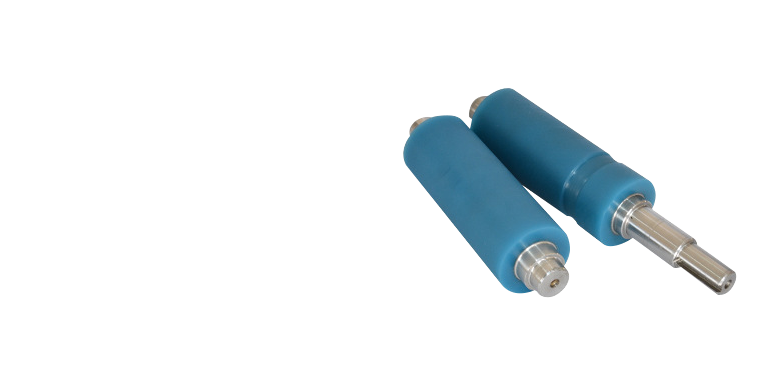
When a rubber roller fails in the middle of a production run, the cause is almost always traced back to the same root problem: inadequate rubber roller bonding between the elastomer layer and the metal or plastic core. Rubber roller bonding is the structural foundation that holds every roller together under mechanical stress, heat, and continuous rotation. Without reliable rubber roller bonding, the outer sleeve delaminates, shifts, or separates entirely from the core, leading to unplanned downtime, product defects, and costly replacements. Understanding why rubber roller bonding technology matters is the first step toward selecting rollers that actually last.
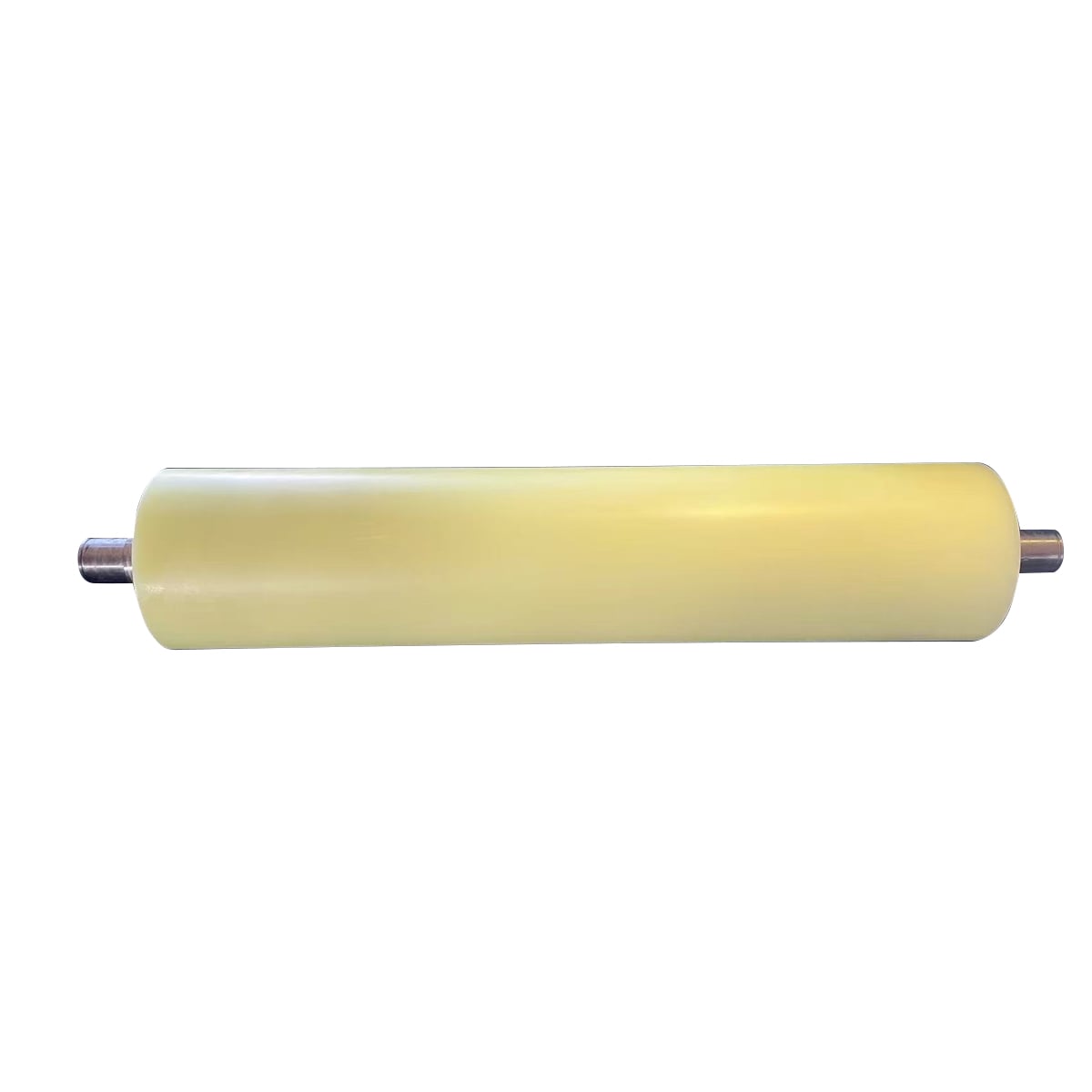
Pulisen has built its manufacturing reputation around a proprietary approach to rubber roller bonding that addresses the mechanical, chemical, and thermal factors that cause core separation. Every stage of the rubber roller bonding process, from surface preparation and adhesive chemistry to vulcanization parameters, is engineered to eliminate the failure modes that plague low-quality rollers. This article explains how Pulisen's rubber roller bonding technology works, why it outperforms conventional methods, and what it means for equipment operators who depend on rollers every shift.
The Root Causes of Core Separation in Rubber Rollers
Why Standard Rubber Roller Bonding Fails Under Load
Core separation is not a random event. It follows predictable patterns rooted in poor rubber roller bonding quality. In many conventional rollers, the bonding interface is achieved with minimal surface treatment and a single-layer adhesive film. When the roller is subjected to compressive loads and rotational shear simultaneously, the rubber roller bonding interface experiences peeling stress that a thin adhesive layer simply cannot sustain. The elastomer lifts from the core in a progressive delamination that accelerates with every revolution.
Temperature cycling is another major driver of rubber roller bonding failure. Printing and logistics machinery generates significant heat at contact zones. If the adhesive system used in rubber roller bonding has a lower thermal tolerance than the surrounding elastomer or core material, differential expansion creates micro-gaps at the interface. These micro-gaps accumulate over time, and what begins as invisible rubber roller bonding weakness becomes visible core separation within weeks or months of service. Proper rubber roller bonding technology must account for thermal compatibility across all three components: core material, adhesive, and elastomer compound.
Material Incompatibility and Its Effect on Rubber Roller Bonding
Not every adhesive bonds effectively to every combination of core and rubber compound. Material incompatibility is one of the most overlooked causes of rubber roller bonding failure. A polyurethane elastomer behaves very differently from a natural rubber compound, and each demands a different adhesive chemistry to achieve durable rubber roller bonding. When manufacturers use a generic bonding agent regardless of elastomer type, the rubber roller bonding strength is compromised from the start. Pulisen addresses this by matching adhesive chemistry to the specific elastomer formulation and core substrate used in each roller design.
How Pulisen's Rubber Roller Bonding Technology Works
Surface Preparation as the Basis of Strong Rubber Roller Bonding
Strong rubber roller bonding begins before any adhesive is applied. Pulisen uses a multi-stage surface preparation protocol that removes oxidation, oils, and microscopic contaminants from the core surface. This preparation increases the surface energy of the core material, allowing the adhesive used in rubber roller bonding to achieve molecular-level contact across the entire interface area. A clean, activated surface is the single most important variable in achieving rubber roller bonding that resists peeling under operational loads.
After mechanical and chemical surface activation, Pulisen applies a primer layer specifically formulated for the target elastomer. This primer acts as a bridge in the rubber roller bonding system, creating covalent links between the inorganic core surface and the organic elastomer matrix. The result is rubber roller bonding that performs as a continuous material system rather than a mechanical joint. This distinction is critical: rubber roller bonding achieved through molecular integration resists shear and peel forces far more effectively than adhesion achieved through surface contact alone.
Vulcanization Control in the Rubber Roller Bonding Process
Vulcanization is where rubber roller bonding is either locked in permanently or compromised permanently. Pulisen's controlled vulcanization process applies precise temperature profiles and pressure cycles that allow the adhesive and elastomer to co-cure simultaneously. Co-curing during rubber roller bonding means that cross-link networks form across the adhesive-elastomer interface rather than at each surface separately. The rubber roller bonding interface effectively disappears as a distinct boundary, replaced by a continuous cross-linked network that distributes stress across the entire bonded zone.
Pressure uniformity during vulcanization is equally important to rubber roller bonding quality. Uneven pressure creates voids at the rubber roller bonding interface that act as stress concentration points. Pulisen uses tooling designed to maintain consistent hydrostatic pressure across the full bonded area during the entire vulcanization cycle. This attention to process control is why Pulisen's rubber roller bonding resists the kind of localized delamination that is common in rollers produced with less controlled manufacturing conditions.
Practical Benefits of Superior Rubber Roller Bonding in Logistics and Printing
Operational Reliability Linked to Rubber Roller Bonding Integrity
In logistics machinery, conveyor and drive rollers are under continuous load for extended shifts. Rubber roller bonding failure in this environment causes conveyor misalignment, product jams, and belt damage. Because Pulisen's rubber roller bonding maintains its integrity under sustained compressive and torsional loads, operators report significantly longer service intervals compared to rollers with conventional rubber roller bonding. Fewer unplanned stops translate directly into higher throughput and lower maintenance costs per operating hour.
Printing machinery places a different set of demands on rubber roller bonding. Ink transfer rollers must maintain precise dimensional consistency across thousands of impressions. If rubber roller bonding allows even slight core movement, the elastomer surface runs out of round, causing ink density variations and registration errors. Pulisen's rubber roller bonding technology holds the elastomer concentrically fixed to the core throughout the roller's service life, ensuring that print quality remains consistent from the first impression to the last.
Long-Term Cost Value of High-Quality Rubber Roller Bonding
The upfront cost of a roller with high-quality rubber roller bonding is typically higher than commodity alternatives. However, total cost of ownership strongly favors superior rubber roller bonding. Rollers that fail early due to core separation must be replaced, and each replacement event carries direct material cost, installation labor, and production downtime cost. High-integrity rubber roller bonding extends service life, reduces the frequency of those replacement events, and lowers the total cost per hour of productive operation. For procurement teams evaluating rubber roller bonding quality as a selection criterion, the economic case is straightforward.
FAQ
What makes rubber roller bonding fail prematurely in industrial rollers?
Rubber roller bonding fails prematurely when surface preparation is inadequate, when adhesive chemistry is mismatched to the elastomer type, or when vulcanization parameters produce incomplete cross-linking at the bonding interface. Thermal cycling and sustained shear loads then exploit these weaknesses, causing rubber roller bonding to delaminate progressively until core separation is visible.
How does vulcanization affect the quality of rubber roller bonding?
Vulcanization determines whether rubber roller bonding forms a true molecular integration or merely a surface-level adhesion. Controlled co-curing creates cross-link networks that span the adhesive-elastomer boundary, making rubber roller bonding far more resistant to peeling and shear. Uncontrolled vulcanization introduces voids and incomplete cure zones that weaken rubber roller bonding over time.
Why is rubber roller bonding especially critical in printing applications?
In printing applications, rubber roller bonding directly affects dimensional stability and concentricity. Any movement of the elastomer relative to the core caused by weak rubber roller bonding introduces runout, which creates ink density inconsistencies and registration errors. Reliable rubber roller bonding keeps the elastomer precisely positioned on the core, maintaining print quality across the full service life of the roller.