EN
EN
Achieving perfect alignment when handling heavy pipes in industrial operations requires the right combination of equipment, technique, and understanding of mechanical principles. Heavy-duty vconveyor rollers represent a specialized solution designed specifically to address the unique challenges of pipe alignment in manufacturing, construction, and processing environments where precision is paramount.
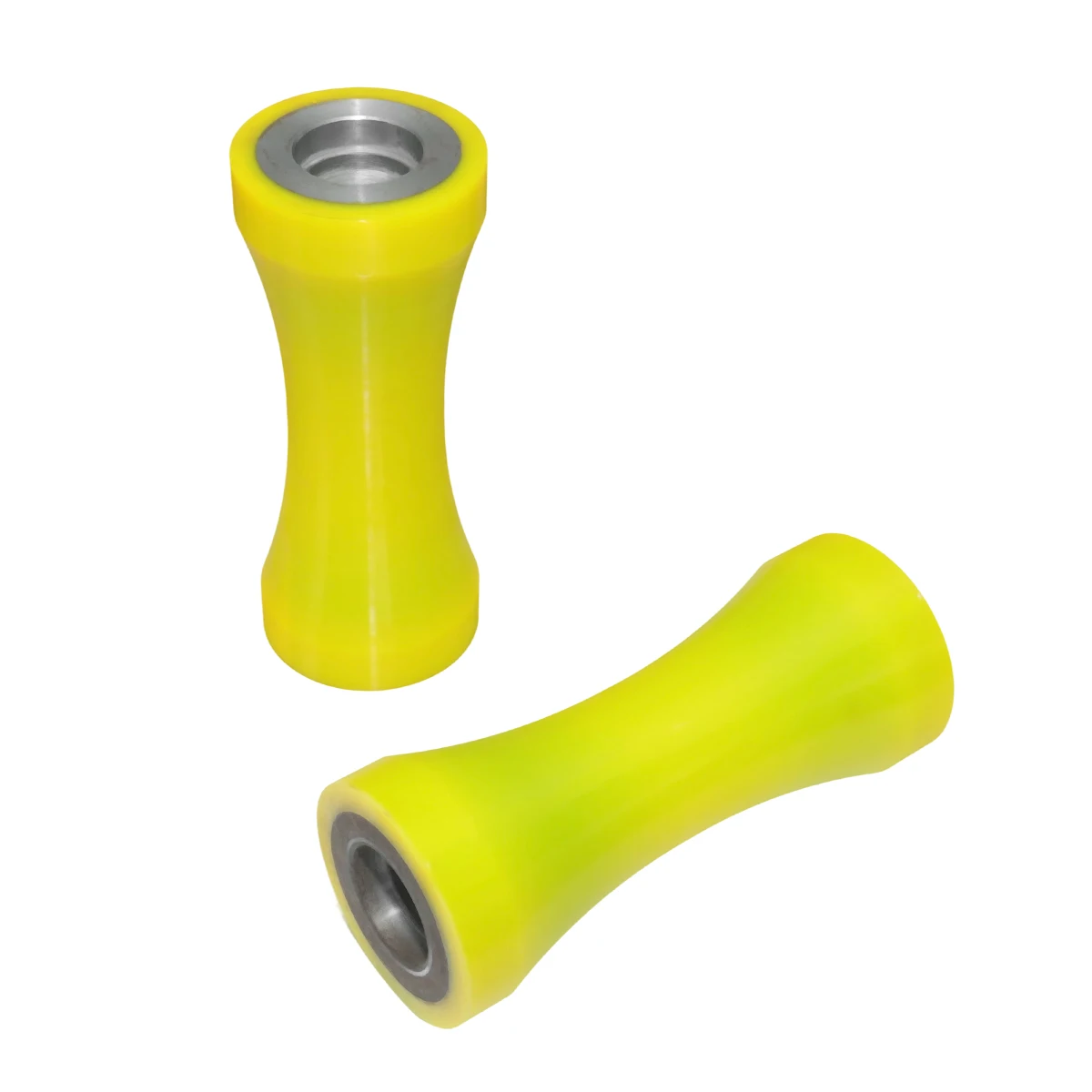
The V-shaped design of these specialized rollers creates natural centering points that guide heavy pipes into proper position through gravitational forces and mechanical contact. This alignment system becomes particularly critical when dealing with pipes weighing several tons, where manual positioning is impractical and precision requirements demand consistent, repeatable results across extended production runs.
Understanding the Mechanical Principles Behind V-Roller Pipe Alignment
Contact Point Geometry and Load Distribution
The fundamental principle governing pipe alignment with vconveyor rollers lies in the strategic positioning of contact points. The V-groove creates two distinct contact lines that automatically center cylindrical objects through gravitational settling. When a heavy pipe rests in the V-groove, the geometry ensures that the pipe's centerline aligns with the roller's centerline, regardless of minor variations in pipe diameter or initial placement.
This geometric relationship becomes more pronounced with heavier loads, as increased gravitational force enhances the centering effect. The load distribution across the two contact lines also reduces point stress concentrations that could otherwise cause deformation or surface damage to the pipe material during handling operations.
Friction Dynamics and Movement Control
Heavy-duty vconveyor rollers utilize controlled friction to manage pipe movement during alignment processes. The roller material and surface finish are engineered to provide sufficient grip for controlled rotation while allowing smooth longitudinal movement when needed. This balance prevents unwanted pipe rotation during positioning while enabling precise adjustments through applied force.
The rotational characteristics of vconveyor rollers also contribute to alignment accuracy by allowing pipes to find their natural resting position as they settle into the V-groove. This self-centering behavior reduces the need for manual adjustments and improves overall positioning consistency across multiple handling cycles.
Implementation Strategies for Heavy Pipe Alignment Systems
Roller Spacing and Configuration Planning
Proper spacing between vconveyor rollers forms the foundation of effective pipe alignment systems. The distance between rollers must account for pipe length, weight distribution, and deflection characteristics under load. Shorter spacing provides better support for heavier pipes but increases equipment costs and complexity, while wider spacing reduces costs but may allow excessive sagging in long, heavy pipes.
Standard engineering practice suggests spacing vconveyor rollers at intervals not exceeding one-quarter of the pipe length for heavy applications, with closer spacing required for pipes with thin walls or high flexibility. This configuration ensures adequate support while maintaining the alignment benefits provided by the V-groove geometry.
Load Capacity Matching and Safety Factors
Selecting appropriate load ratings for vconveyor rollers requires careful calculation of static and dynamic loads during pipe handling operations. The combined weight of the pipe and any internal contents must be distributed across all supporting rollers, with additional safety factors applied to account for dynamic loading during movement and positioning.
Heavy-duty vconveyor rollers typically feature load ratings that exceed standard conveyor applications by significant margins. These enhanced ratings accommodate the concentrated loads imposed by heavy pipes while maintaining dimensional stability and smooth operation throughout the alignment process.
Operational Techniques for Precise Pipe Positioning
Sequential Alignment Methodology
Achieving perfect pipe alignment requires a systematic approach that leverages the natural centering properties of vconveyor rollers while accounting for real-world variables such as pipe irregularities, temperature effects, and handling constraints. The alignment process begins with rough positioning using overhead cranes or other lifting equipment, followed by fine adjustments as the pipe settles into the roller system.
The sequential approach involves lowering the pipe onto the vconveyor rollers at one end first, allowing gravity to establish initial alignment before supporting the remaining length. This technique prevents binding or forced positioning that could compromise final alignment accuracy or damage the equipment.
Measurement and Verification Procedures
Precision alignment verification requires measurement techniques appropriate for heavy industrial environments. Laser alignment systems provide non-contact measurement capabilities that can verify pipe centerline position relative to vconveyor rollers without physical interference. These systems offer accuracy levels sufficient for most heavy pipe applications while maintaining safety distances from the work area.
Alternative measurement approaches include mechanical indicators, string lines, and optical instruments depending on required accuracy levels and environmental conditions. The key factor in measurement selection involves balancing accuracy requirements with practical limitations imposed by pipe size, weight, and handling constraints.
Troubleshooting Common Alignment Challenges
Addressing Pipe Deflection and Sagging
Heavy pipes naturally deflect under their own weight, creating alignment challenges that vconveyor rollers must accommodate while maintaining overall system accuracy. The V-groove design helps manage deflection by providing continuous support along the pipe length, but excessive sagging can still occur with inadequate roller spacing or insufficient structural support.
Deflection compensation techniques include strategic placement of additional vconveyor rollers at calculated intervals, temporary support structures during alignment procedures, and pre-loading adjustments that account for expected deflection patterns. These approaches maintain alignment accuracy while working within the physical limitations imposed by heavy pipe handling.
Managing Thermal Expansion and Contraction
Temperature variations can significantly affect pipe dimensions and alignment requirements, particularly in heavy industrial applications where thermal cycling is common. Vconveyor rollers must accommodate dimensional changes while maintaining alignment accuracy throughout temperature ranges encountered during normal operations.
Thermal management strategies include providing expansion joints in roller support structures, using roller materials with compatible thermal expansion characteristics, and implementing alignment procedures that account for expected dimensional changes. These considerations become particularly important in outdoor installations or high-temperature industrial processes.
Maintenance and Optimization Practices
Preventive Maintenance Protocols
Heavy-duty vconveyor rollers require regular maintenance to ensure continued alignment accuracy and operational reliability. Preventive maintenance protocols focus on bearing lubrication, surface condition monitoring, and alignment verification to prevent gradual degradation that could compromise pipe positioning accuracy over time.
Maintenance scheduling should account for operational intensity, environmental conditions, and load characteristics specific to each installation. Heavy pipe handling applications typically require more frequent inspection intervals due to higher stress levels and potential for accelerated wear compared to lighter conveyor applications.
Performance Monitoring and Optimization
Continuous monitoring of vconveyor roller performance provides early warning of alignment problems and opportunities for system optimization. Key performance indicators include roller rotation smoothness, surface wear patterns, and measurement verification of pipe positioning accuracy over time.
Optimization opportunities often emerge through analysis of operational data, revealing patterns in alignment accuracy, maintenance requirements, and operational efficiency. These insights can guide improvements in roller selection, spacing configuration, and operational procedures that enhance overall system performance.
FAQ
What is the maximum pipe weight that vconveyor rollers can handle safely?
Heavy-duty vconveyor rollers are available with load ratings ranging from several hundred pounds to over 10,000 pounds per roller, depending on specific design requirements. The maximum safe pipe weight depends on the number of supporting rollers, their spacing, and the pipe's weight distribution characteristics. Professional engineering analysis is recommended for applications involving pipes weighing more than 5,000 pounds to ensure proper load distribution and safety factors.
How do I determine the correct spacing between vconveyor rollers for my application?
Roller spacing calculation involves analyzing pipe length, diameter, wall thickness, material properties, and weight distribution to prevent excessive deflection while maintaining alignment accuracy. A general guideline suggests spacing rollers at intervals not exceeding one-quarter of the pipe length, with closer spacing required for thin-walled or flexible pipes. Engineering software or consultation with alignment specialists can provide precise spacing recommendations for specific applications.
Can vconveyor rollers accommodate pipes with irregular shapes or surface conditions?
Standard vconveyor rollers work best with round pipes having relatively smooth surfaces, but specialized roller designs can accommodate irregular shapes, corrugated surfaces, or pipes with external attachments. Custom V-groove profiles, adjustable roller configurations, and specialized surface materials can address specific pipe characteristics while maintaining alignment functionality. The key is matching roller specifications to actual pipe conditions rather than attempting to force incompatible combinations.
What maintenance is required to keep vconveyor rollers operating at peak alignment accuracy?
Regular maintenance includes bearing lubrication according to manufacturer specifications, visual inspection of roller surfaces for wear or damage, verification of mounting alignment, and periodic measurement of pipe positioning accuracy. Heavy-duty applications may require more frequent maintenance due to higher stress levels and environmental exposure. Establishing baseline measurements during initial installation provides reference points for detecting gradual changes in alignment performance over time.
Table of Contents
- Understanding the Mechanical Principles Behind V-Roller Pipe Alignment
- Implementation Strategies for Heavy Pipe Alignment Systems
- Operational Techniques for Precise Pipe Positioning
- Troubleshooting Common Alignment Challenges
- Maintenance and Optimization Practices
-
FAQ
- What is the maximum pipe weight that vconveyor rollers can handle safely?
- How do I determine the correct spacing between vconveyor rollers for my application?
- Can vconveyor rollers accommodate pipes with irregular shapes or surface conditions?
- What maintenance is required to keep vconveyor rollers operating at peak alignment accuracy?