EN
EN

In high-speed electronics packaging, every component of a conveyor system directly influences product quality and throughput. Round belts have become the preferred drive and transport element across modern electronics assembly and packaging lines. Their circular cross-section, smooth surface, and material versatility make round belts exceptionally well-suited to the precise, sensitive demands of electronics environments. Understanding why round belts outperform alternatives in this context helps engineers and procurement specialists make smarter equipment decisions.
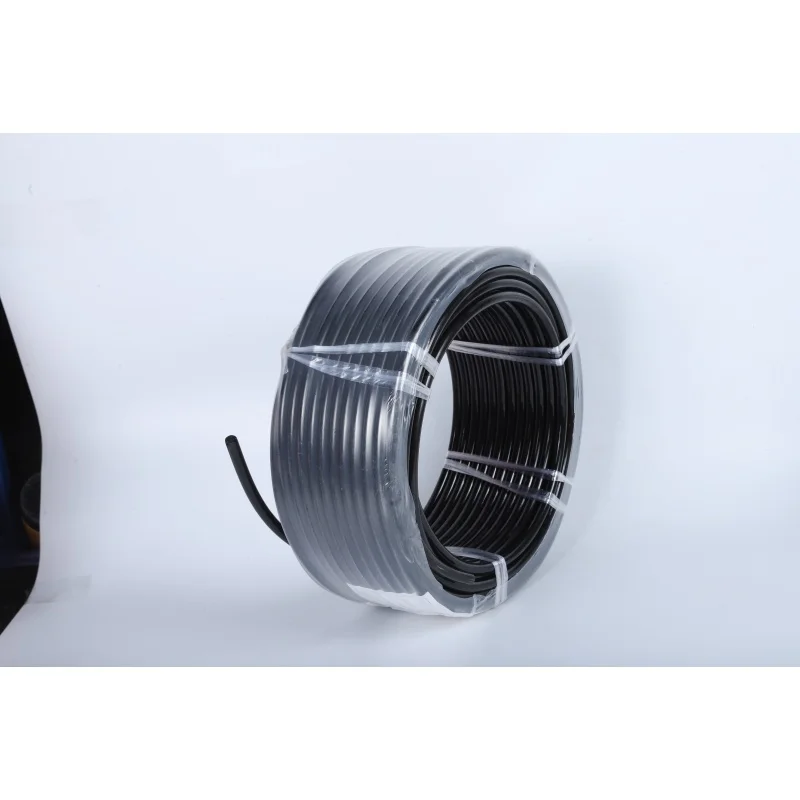
Electronics packaging lines operate at high speeds while handling delicate circuit boards, sensors, and packaged devices that cannot tolerate contamination, static discharge, or mechanical shock. Round belts address all three of these critical concerns simultaneously. Because round belts are manufactured from polyurethane and engineered as endless loops, they deliver consistent tension, minimal vibration, and long operational life — all without the maintenance burden associated with flat belts or toothed drive systems. This article explores the core reasons why round belts are the ideal solution for high-speed electronics packaging.
The Mechanical Advantages of Round Belts in High-Speed Lines
Low Vibration and Smooth Power Transmission
One of the most compelling mechanical benefits of round belts is their ability to transmit power smoothly at elevated speeds. Round belts flex uniformly around pulleys and drive rollers, which reduces the harmonic vibration that flat belts sometimes generate at high RPM. In electronics packaging, even minor vibration can cause component misalignment or damage sensitive parts during transit. Round belts absorb minor speed fluctuations in the drive system, delivering a consistently smooth motion to the product being conveyed. This characteristic makes round belts a practical engineering choice wherever precision matters.
Versatile Pulley Compatibility and Routing
Round belts can be routed over small-diameter pulleys and around complex path geometries that flat or toothed belts cannot accommodate. This flexibility is critical in compact electronics packaging machinery, where space is limited and conveyor paths must navigate tight curves, cross-drives, and angled transfers. Round belts maintain their circular profile under load, which means they seat reliably in standard V-groove and round-groove pulleys without slipping or deforming. The result is a drive system that is easy to configure, simple to tension, and highly adaptable to various machine layouts. Engineers designing packaging systems appreciate round belts precisely because of this routing versatility.
Anti-Static Properties That Protect Electronics
ESD Safety in Sensitive Environments
Electrostatic discharge is one of the most serious threats to electronic components during packaging. Even a small static event can damage integrated circuits, rendering products defective and triggering costly recalls. Round belts manufactured from ESD-safe polyurethane are specifically engineered to dissipate static charge rather than accumulate it. By maintaining surface resistivity within controlled ranges, anti-static round belts prevent charge buildup as products slide or travel across the belt surface. This protection is not an optional feature — in cleanroom and electronics manufacturing contexts, ESD-safe round belts are a fundamental requirement. Facilities that switch to certified anti-static round belts report fewer static-related defects and more consistent quality outcomes.
Cleanroom Compatibility and Particle Contamination Control
Electronics packaging environments often operate under cleanroom or controlled-particulate conditions. Round belts made from polyurethane generate minimal particulate wear compared to rubber alternatives. Their non-porous, smooth surface does not harbor dust or release fibers that could contaminate sensitive components. Round belts are also resistant to the cleaning agents commonly used in electronics facilities, including isopropyl alcohol and mild solvents. This chemical resistance ensures that round belts maintain their dimensional integrity and anti-static properties through repeated cleaning cycles, contributing to a longer service life and stable ESD performance throughout the belt's operational lifespan.
Operational Efficiency and Cost Value of Round Belts
Endless Construction and Reduced Downtime
Round belts in endless loop form eliminate the mechanical joints and splice points that are common failure locations in conventional belts. A jointed belt creates a periodic impact point each time the splice passes over a pulley, which generates vibration and accelerates wear. Endless round belts remove this weakness entirely, delivering a seamless drive surface that runs quietly and consistently. In high-speed electronics packaging lines where uptime is critical, the endless construction of round belts translates directly into fewer unplanned stops. Maintenance teams report that endless round belts significantly outlast spliced alternatives under the same operating conditions, reducing both replacement frequency and total maintenance cost.
Tension Stability and Consistent Drive Force
Round belts maintain their cross-sectional shape under tension, which means the contact geometry between the belt and pulley groove remains consistent throughout operation. This consistency supports stable drive force delivery, which is especially important when packaging machines accelerate and decelerate rapidly to handle varying product sizes. Unlike flat belts that may track off-center or require frequent re-tensioning, round belts self-center within their grooves and hold tension effectively. This self-aligning property reduces operator intervention and allows packaging lines to run at maximum speed with minimal adjustment. Over a full production shift, the reliability of round belts contributes measurable efficiency gains compared to other drive belt types.
FAQ
What makes polyurethane round belts better than rubber round belts for electronics packaging?
Polyurethane round belts offer superior abrasion resistance, lower particulate generation, and better chemical resistance compared to rubber round belts. They can also be manufactured with ESD-safe properties built into the material, which rubber belts cannot reliably achieve. For electronics packaging, polyurethane round belts are the preferred choice because they combine mechanical performance with contamination control and static protection in a single product.
How do I select the correct diameter and hardness for round belts on my packaging line?
The correct diameter for round belts depends on the pulley groove dimensions and the required drive force. Smaller diameters suit lighter loads and tight pulley paths, while larger diameters carry more load with less stretch. Hardness selection balances grip and flex life — softer round belts offer more grip on smooth surfaces, while harder variants resist deformation under higher tension. Consulting the pulley groove specification and the machine's load requirements is the most reliable way to select the right round belts for a specific application.
Can round belts be used in both horizontal and vertical conveyor sections of a packaging line?
Yes, round belts are suitable for both horizontal and vertical conveyor sections. Their circular cross-section allows them to transmit torque efficiently regardless of the conveyor orientation. In vertical sections, the grip and tension characteristics of round belts prevent product slippage during upward or downward transfers. This orientation flexibility is one reason why round belts are widely adopted across multi-axis packaging machinery in the electronics industry.