Omnidirectional Movement Capability
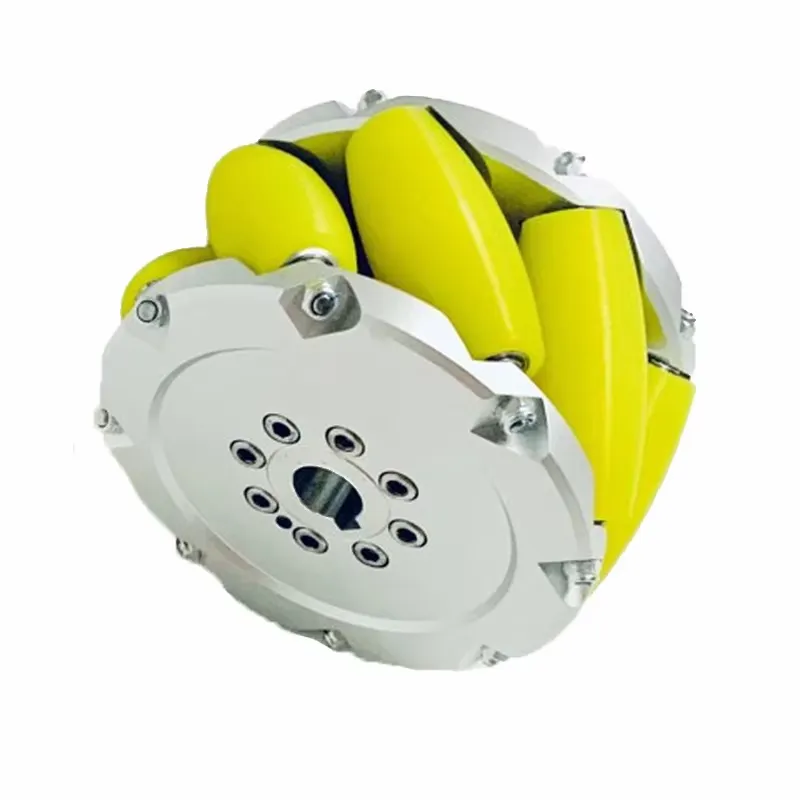
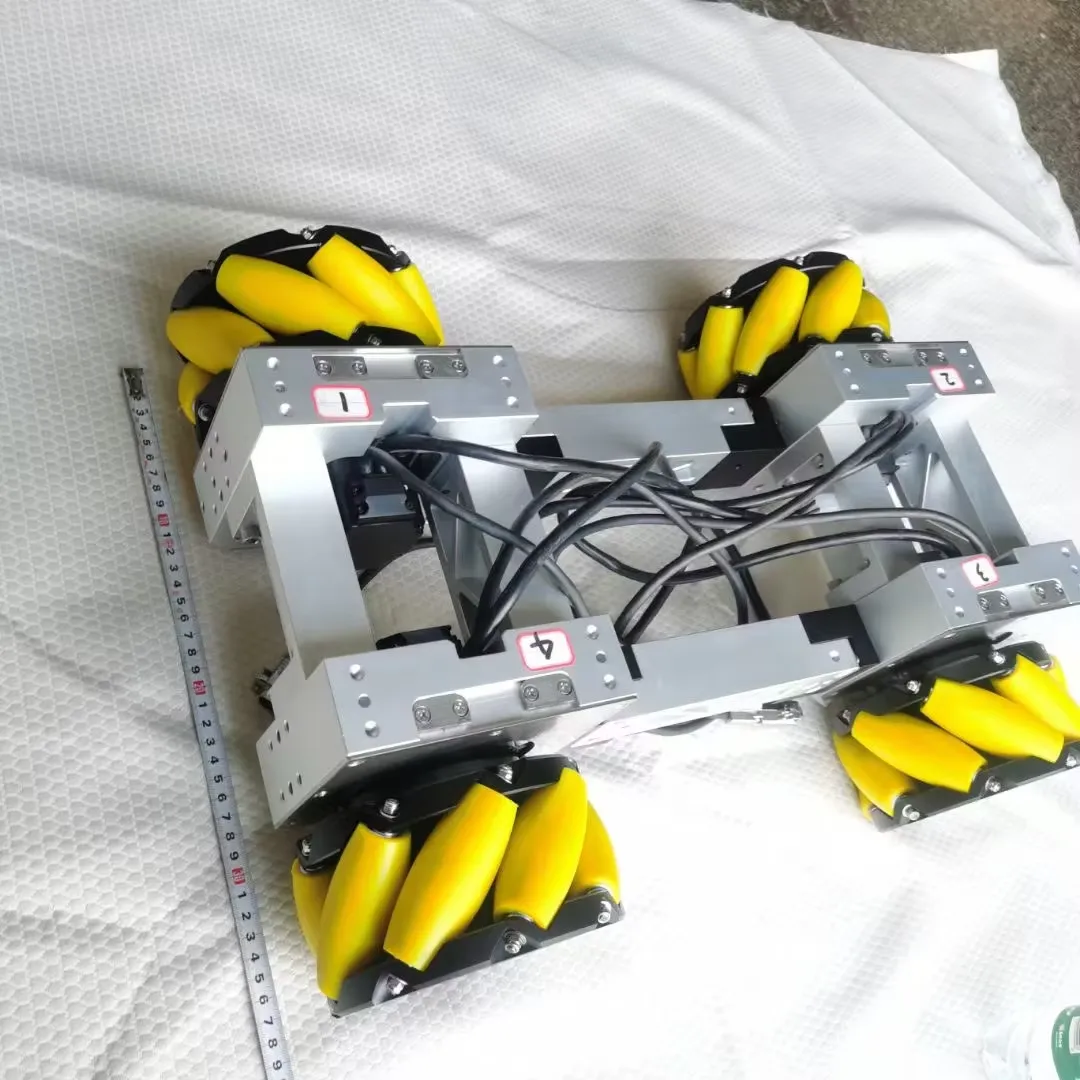
The omnidirectional movement capability of 2 inch mecanum wheels represents a paradigm shift in mobile robotics, offering unparalleled freedom of motion that revolutionizes how small robots navigate their environment. This remarkable feature stems from the ingenious design of angled rollers positioned at precisely 45 degrees around the wheel's circumference, creating a system where forces can be distributed across multiple vectors simultaneously. When four 2 inch mecanum wheels are properly configured on a platform, they enable movement in any direction including forward, backward, sideways, diagonal, and rotational motion, all while maintaining the robot's orientation. This capability eliminates the traditional constraints associated with conventional wheels, where changing direction requires complex steering mechanisms or time-consuming turning maneuvers. The practical implications of this omnidirectional movement are profound, particularly in applications where space is limited or precise positioning is critical. For instance, in warehouse automation scenarios, robots equipped with 2 inch mecanum wheels can navigate narrow aisles while carrying loads, moving laterally to avoid obstacles without needing to rotate the entire platform. Educational applications benefit enormously from this feature, as students can program complex movement patterns and observe immediate results, making abstract robotics concepts tangible and engaging. The omnidirectional capability also proves invaluable in competitive robotics, where teams must accomplish tasks within confined spaces and time constraints. Robots can approach targets from any angle, perform precise adjustments, and execute complex maneuvers that would be impossible with traditional wheel configurations. Research applications leverage this movement flexibility for studying swarm robotics behaviors, autonomous navigation algorithms, and human-robot interaction scenarios. The engineering precision required to achieve true omnidirectional movement with 2 inch mecanum wheels demands careful attention to wheel alignment, motor synchronization, and control algorithms, but the resulting capabilities far exceed the investment in complexity, opening possibilities that simply do not exist with conventional wheel systems.
 EN
EN